The blasts, mostly targeting bars and cafes in the Frankfurt area, could be linked to organized crime, according to police
Published 17 Sep, 2026 18:03
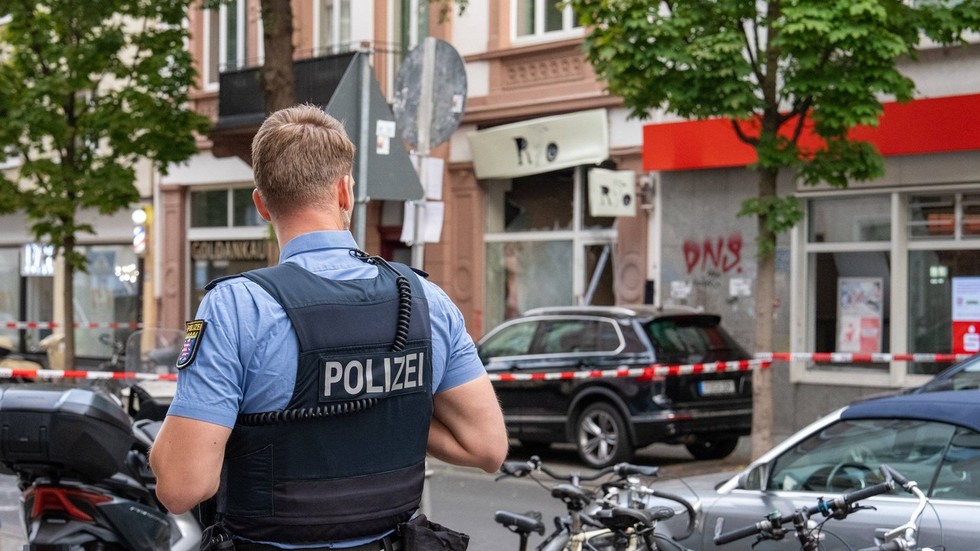
A police officer patrols the area affected by an improvised explosive device detonation in Frankfurt am Main, Germany, on September 17, 2026. © Global Look Press / IMAGO / 5VISION.NEWS
A series of mysterious explosions have rocked the central German city of Frankfurt and the surrounding area this week, with police investigating possible links to organized crime.
Two improvised explosive devices detonated within minutes of each other in Frankfurt early on Thursday. One damaged a cafe in the east of the city, while the other struck a popular shisha bar on the Zeil, one of Germany’s best-known shopping streets.
The second blast was powerful enough to damage another bar across the street and a neighboring bank office, according to local media. One resident awoken by the explosion compared the scene to a “war.”
Police arrested a 17-year-old Dutch national following the blasts. No further details about the suspect have been released.
Read more
The explosions were the latest in a string of similar incidents in the Frankfurt area. Three blasts occurred within 24 hours between Sunday and Monday, targeting a cafe, a bar and a kiosk in Frankfurt and nearby Offenbach. No casualties have been reported.
A 15-year-old Dutch national was arrested following one of the attacks, according to police.
The Hessian State Criminal Police Office has said a “double-digit” number of similar incidents are under investigation. Authorities suspect some could be linked to so-called “violence as a service,” in which criminal networks outsource violent acts to third parties, often recruiting young perpetrators online or through social media.
Read more
Frankfurt police have previously described the practice as an emerging form of organized crime involving the recruitment of minors, including from abroad, to carry out acts of violence.
Hessian police have warned that the trend represents a new dimension of serious organized crime and poses a “considerable” threat to public safety.
The latest blasts coincided with Interior Minister Alexander Dobrindt presenting a report on organized crime in Germany, which he described as a “growing threat.”
“Criminal gangs are becoming more professional, brutal, and unscrupulous,” Dobrindt said, pledging to strengthen efforts against criminal networks.
According to the Interior Ministry, almost 700 organized crime investigations were launched last year, involving nearly 8,000 suspects – the highest figure in five years.