

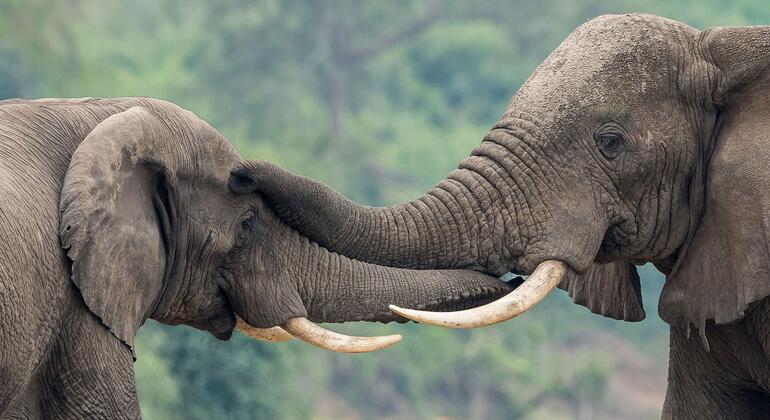
 The package originated in Entebbe, Uganda, bound for Cairo, containing 10 kilograms of thumb-sized pieces that could have been either bone or elephant ivory.
When detectives from the Uganda Police Force and investigators from the Uganda Wildlife Authority intercepted the package in January 2025, they needed more than suspicion to investigate the person who sent the package.
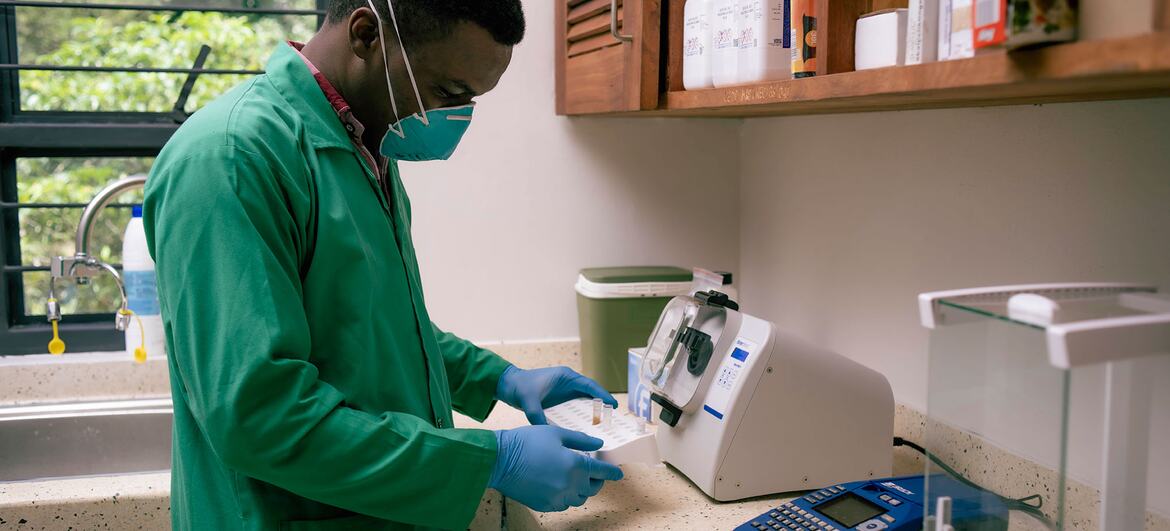
The police sent a sample to the Uganda Wildlife Forensics and Timber Laboratory in Entebbe, a facility that has been supported since 2019 by the UN Office on Drugs and Crime (UNODC).
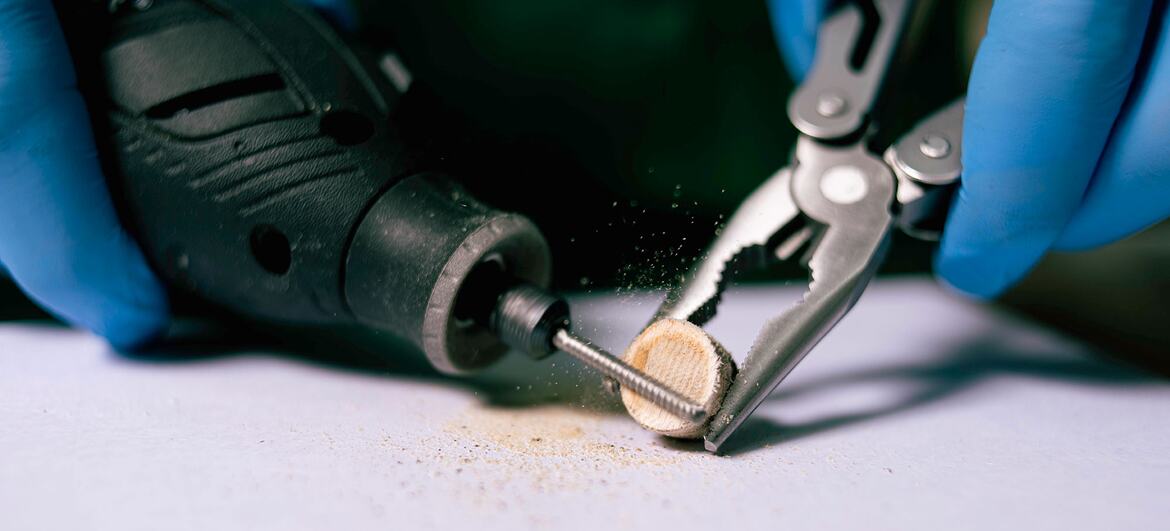
Scientists found a distinctive cross-hatched pattern associated with elephant ivory. DNA testing later confirmed that the material came from an elephant, lab manager Patrick Chiyo told UN News.
© European Union
A lab technician carries out a test at the Uganda Wildlife Forensics and Timber Laboratory in Entebbe.
Two months later, police arrested the man who sent the package. At his residence, investigators found additional elephant ivory, along with warthog ivory. He was charged with attempted trafficking and illegal possession and sentenced to 15 years in prison or a fine equivalent to 140 million Ugandan shillings – or more than $35,000 USD.
For Mr. Chiyo, the case illustrates why forensic evidence matters in the fight against wildlife crime: it can establish what an animal product is when traffickers have cut it into small pieces or removed the physical characteristics that would make it easy to identify.
“Poachers are removing identification features from wildlife carcasses to evade detection,” Mr. Chiyo said.
He added that DNA reports are increasingly being required by Uganda’s wildlife court and that suspects are pleading guilty more often thanks to the lab.
From seizure to science
Evidence from the UN’s 2024 World Wildlife Report shows that Uganda is as a significant hub of organised wildlife trafficking networks – especially of elephant ivory but also pangolin, a scaly anteater.
Tweet URL
In April, the Uganda Wildlife Forensics and Timber Laboratory opened with support from Denmark, the European Union and UNODC to help address the ivory issue.
It builds on a national training and technical support centre established in 2019 as a pilot wildlife forensics facility through a partnership involving UNODC, the TRACE Wildlife Forensics Network and the Ugandan Government. The earlier facility has assisted hundreds of investigations and prosecutions connected to illegal wildlife trade.
The lab’s work often begins far from Entebbe. Officers may seize sacks containing ivory pieces, pangolin scales or smoked bushmeat. Because these seizures can be bulky, scientists collect samples at police stations, documenting each step along the way.
Evidence is photographed before it is opened, and again after sampling. The original exhibit is returned to police custody, while sealed samples are transported to the lab for analysis.
The process can take a significant amount of time, Mr. Chiyo said, but it can be decisive, especially when animal remains are incomplete, altered or difficult to identify.
In one case in 2023, Mr. Chiyo travelled about four hours north of Kampala after a suspect was arrested with six skins, six heads, two sacks of meat, 24 hoofed legs and a fetus believed to be from wildlife. The skins appeared to come from antelope, but their exact identity could not be confirmed from appearance alone.
Mr. Chiyo and his team collected samples from the skins and fetus, then used DNA analysis to determine that they came from bushbucks. Mr. Chiyo later testified in court, and the suspect was sentenced to three years in prison.
Targeting wildlife crime
The lab most commonly receives evidence involving elephant ivory, bushmeat and pangolin scales, Mr. Chiyo said.
Bashir Hangi, from the Uganda Wildlife Authority, told UN News that elephants, pangolins, primates and some bird species are among the animals most threatened by illegal poaching and trade in Uganda.
Some people hunt animals for household consumption, while others kill wildlife for commercial gain, Mr. Chiyo said. Commercial trade is the larger threat for wildlife conservation, he added.
Although Mr. Chiyo said Uganda does not have a domestic market for ivory and pangolin scales, there is a thriving market for poached bushmeat. Authorities have encountered cases involving nearly a tonne of meat, he said.
Mr. Hangi said wildlife crime is driven both by organised criminal networks and by local communities facing economic hardship.
The impacts can also fall heavily on communities living near protected areas, where wildlife-related conflict and crop raiding have caused significant problems.
Mr. Chiyo said enforcement must reach the person who kills or captures an animal and those higher up in criminal networks who also profit. Prosecuting higher-ups requires more investment in interagency networks, he added.
© European Union
A sample is tested at Uganda’s Wildlife Forensics and Timber Laboratory.
At the same time, he said, criminal justice is not enough. Alternative livelihoods are important, although they may not eliminate poaching linked to cultural values. He suggested a combined approach of livelihood support, preventive patrols and legal deterrence.
“A living wildlife is worth more benefits for many more people than a dead one,” Mr. Chiyo said.
New focus on timber
The Entebbe lab expanded into timber forensics in April, adding a new capability as Uganda confronts the environmental consequences of illegal logging and timber trafficking.
According to Ugandan authorities, Uganda’s forest cover has fallen from 24 per cent in 1990 to roughly 13 per cent in 2025, in large part due to timber trafficking. The new forensic capacity is intended to strengthen efforts to investigate illegal logging.
© Adobe/Pawel
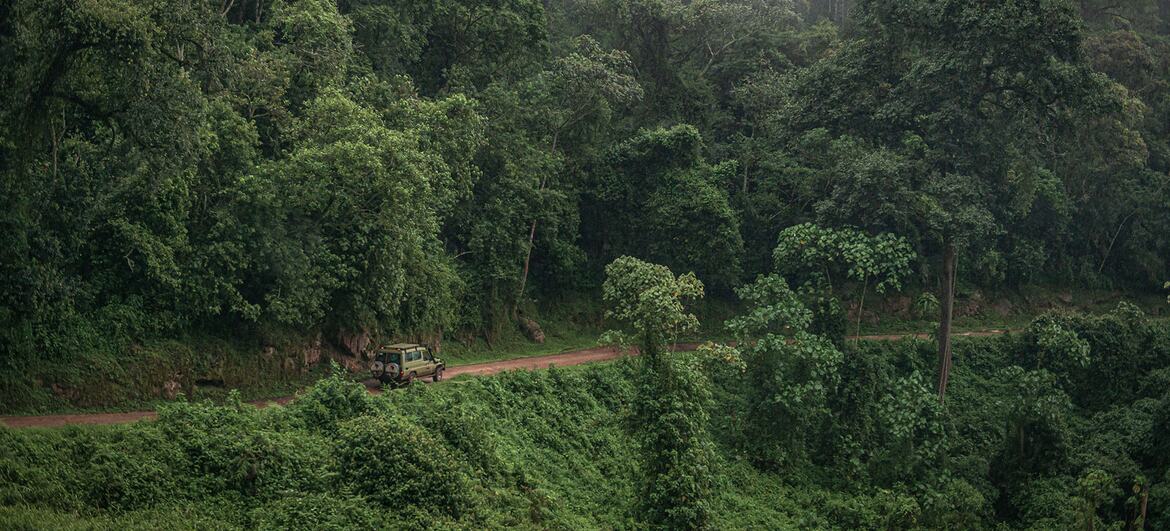
A safari vehicle passes through Bwindi Impenetrable Forest in Uganda.
Timber cases are more complicated than wildlife cases, Mr. Chiyo said, because harvesting is also permitted and regulated in many circumstances. Determining whether a piece of wood was obtained illegally can require additional steps and presents different challenges from identifying animal products.
The lab is only beginning to handle timber cases and has not yet seen evidence that illegal timber is moving through the same networks or routes as wildlife products, he said.
Critical for conservation
Still, the lab’s expansion reflects an increased recognition of the role of cracking down on wildlife and timber trafficking on protecting the environment.
Gladys Kamasanyu, the chief magistrate of the Uganda Wildlife Court, told UNODC in April that criminal justice and law enforcement can play a key role in these efforts.
“The forensic laboratory is critical to the criminal justice system, significantly enhancing the court’s ability to hold offenders accountable by providing objective, scientifically validated evidence to protect Uganda’s natural heritage for future generations,” Ms. Kamasanyu said.
Recognising the same relationship between law enforcement and conservation, Mr. Chiyo said his benchmark for success in the next few years would be “a sustainable and fully government supported wildlife and timber forensic laboratory in Uganda.”
At the current lab, however, each confirmed DNA sequence and seizure can help close the gap between a suspicion of trafficking and a prosecutable crime.
“Enhancing criminal justice through wildlife and timber forensics is an important pillar in environment protection,” Mr. Chiyo said. “Environmental justice will usually benefit the very vulnerable in society.”