 A documentary drawn from United Nations University research was screened at the COP30 climate conference and film festivals across Europe. Its most important journey, though, was the one back to the Mexico City canals where it was filmed.
Scientific reports rarely leave the shelf. Sometimes, though, the research itself becomes a real story that sparks conversations far beyond academia.
That is what happened in Xochimilco, in Mexico City.
In 2025, the UN University Institute for Environment and Human Security (UNU-EHS) published a report on interconnected risks.
It asked why societies struggle to make the changes needed to tackle climate change, biodiversity loss and pollution. One conclusion: societies must think beyond the short term and weigh the wellbeing of future generations.
To bring that idea to life, the researchers turned to Xochimilco. For centuries, its chinamperos have cultivated chinampas – fertile plots built on wetlands that produce food while preserving knowledge handed down through generations.
Today that living heritage faces urbanization, environmental degradation, climate change and a shifting relationship between young people and the land.
The result was a documentary, Chinamperos: Preserving Ancestral Farming Practices in Mexico City, directed by Mexican filmmaker Rodrigo Jardón Galeana and shot in San Gregorio Atlapulco.
The aim was simple – take a scientific report off the page and show what it means for people at the centre of it in real terms.
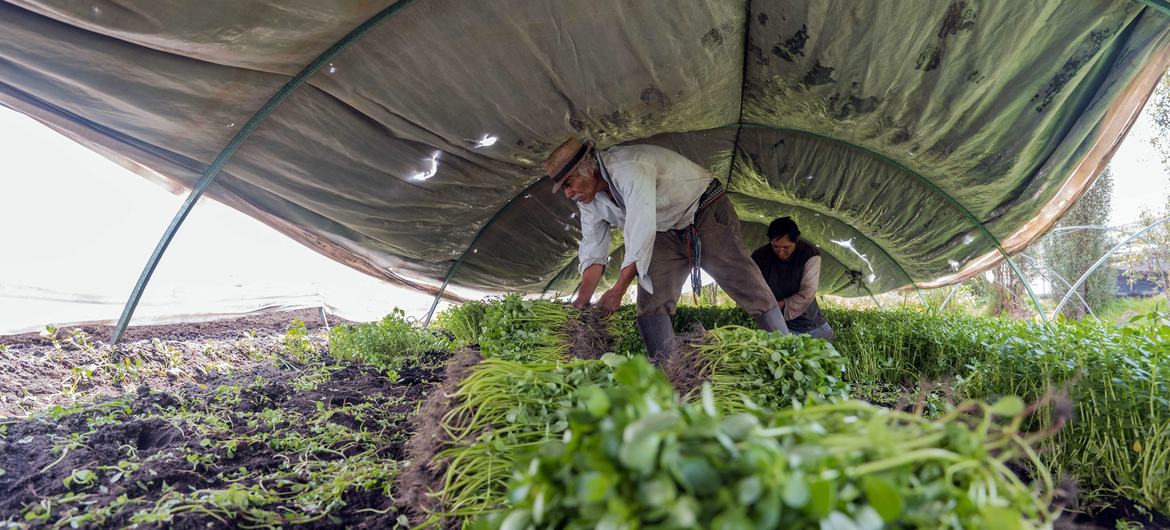
© UNU-EHS/Rodrigo Jardón Gal
A farmer in Mexico tends his crops
A call that reverberated
Mariana Páez, one of those featured, shared the film on social media expecting family, friends and neighbours to watch. Instead, she also heard from people she had not spoken to in years.
Among them were Karen Ramírez and Abel Bastida, former schoolmates on different career paths who shared a fascination with the place where they grew up. A video call planned for 20 or 30 minutes ran to nearly two hours – farming, food, traditions, water, the problems they saw around them.
“We couldn’t stop talking,” Ms. Páez recalls.
That conversation led the three to found the Permanent Seminar on Xochimilco Studies, or SEPEX, to open up dialogue about the territory and its culture. A film meant to communicate research had sparked a local conversation nobody had seen coming.
Heard at last
The documentary has since been screened at COP30 in Brazil and at festivals in Spain, Greece, Türkiye and the Czech Republic. Our colleagues in the UN News Spanish team also told the chinamperos’ story in April 2025.
For Ms. Páez, though, the most important effects were closer to home. In her own family, the film brought greater recognition to work and Indigenous knowledge that had not always been valued like other professions.
One of those featured, chinampero Samuel Avelino, died earlier this year. Ms. Páez later discovered that a screenshot of the UN News story carrying his testimony was among the last things he shared on Facebook.
“He felt heard,” she says.
That matters, she explains, because the everyday lives of chinamperos rarely reach beyond their own circles. Outsiders rarely ask what a day working the land is like.
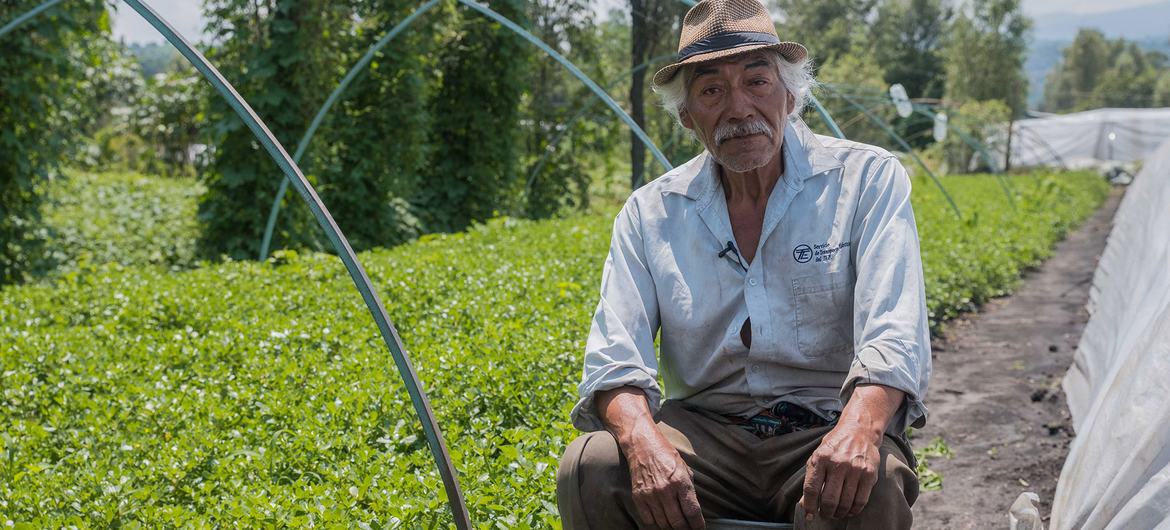
© UNU-EHS/Rodrigo Jardón Gal
Samuel Luna
Coming home
More than a year on, the film returned to Mexico. SEPEX helped organize a visit to Xochimilco for representatives of the University and the UN in Mexico, and screenings followed at the National Centre for the Arts and the Metropolitan Autonomous University.
Residents, researchers, students, UN staff and city officials came together. The aim was not just to show a film, but to let the community speak directly to researchers and decision makers.
“Xochimilco is a living territory,” said Allegra Baiocchi, the UN Resident Coordinator in Mexico – a place where biodiversity, water management, climate adaptation, food security and ancestral knowledge all converge.
For Shen Xiaomeng, Vice-Rector of the University in Europe and Director of UNU-EHS, the trip was a chance to give something back.
Meeting chinampero Eric Enríquez, she noted the pride with which he spoke about his work. Farmers’ survival, she said, depends on how much society values them – but everyone else depends on those who grow our food.
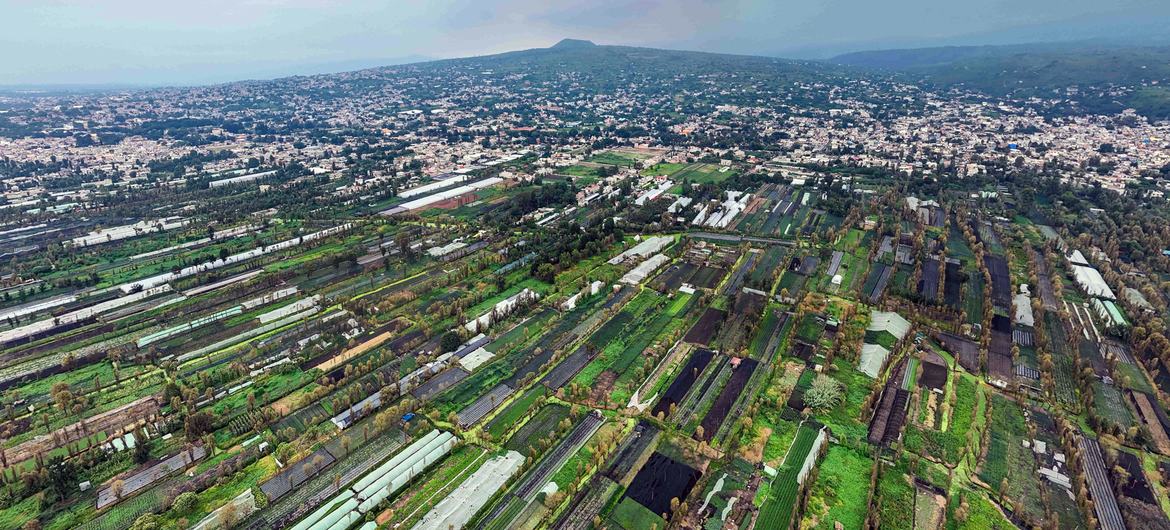
© UNU-EHS/Rodrigo Jardón Gal
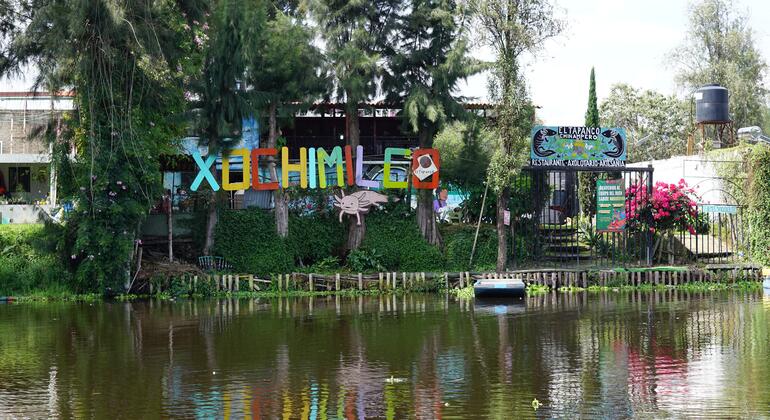
Xochimilco, is located in Mexico City.
A window, not a solution
Ms. Ramírez sees the film not as a solution but as a “window”. It’s a way of looking at what may lie ahead before deciding what to do. She wants it screened in more neighbourhoods and public spaces across Xochimilco, with children joining the conversations.
Mr. Bastida stresses that Xochimilco is not simply a landscape in need of preservation. People live there, with different needs and different visions of its future.
The documentary does not resolve those differences. But it has done something less visible, and perhaps necessary before any solution can emerge: created a place where people can meet on common ground and talk about them.