The continent’s demographic surge will drive much of the globe’s workforce growth, Samia Suluhu Hassan has told SPIEF
Published 5 Jun, 2026 20:56
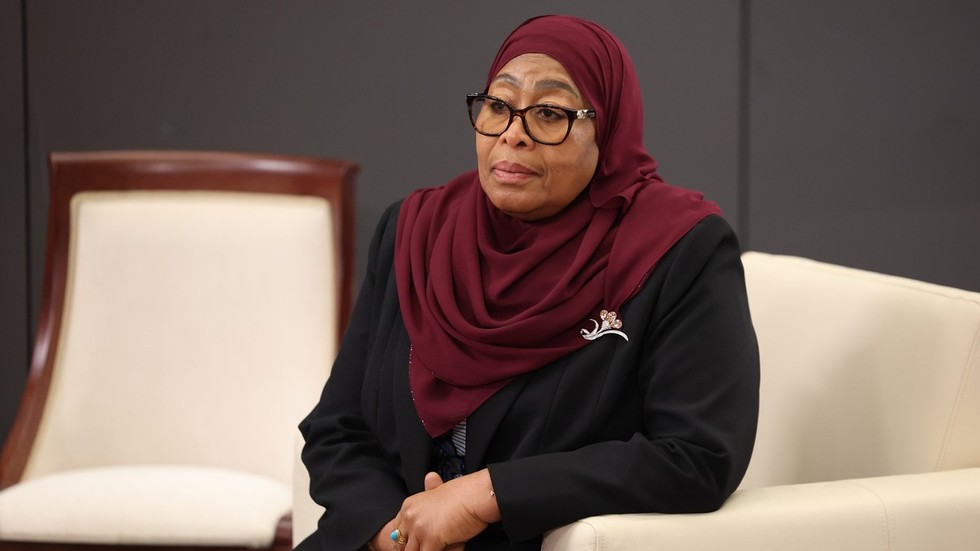
Tanzanian President Samia Suluhu Hassan at the St. Petersburg International Economic Forum, St. Petersburg, Russia, June 5, 2026. © Kremlin
One quarter of the world’s population will be African by mid-century, Tanzanian President Samia Suluhu Hassan said on Friday.
Speaking at the plenary session of the St. Petersburg International Economic Forum (SPIEF) alongside Russian President Vladimir Putin, Uzbek President Shavkat Mirziyoyev and Chinese Vice President Han Zheng, Hassan highlighted Africa’s growing demographic and economic weight.
“By 2050, one in four human beings on this planet will be African,” she said in her opening remarks. “Africa will be the only continent still adding workers to the global labor force on a large scale. Africa will host nine of the world’s 20 fastest-growing economies.”
Hassan also pointed to the potential of the African Continental Free Trade Area, saying that once fully implemented it would become the world’s largest market by population. The agreement, signed in 2018, seeks to create a continent-wide free trade zone by easing the movement of goods, services, and investment across all 55 African Union member states.
Africa is destined to grow.
UN projections show the global population reaching 9.66 billion by 2050, with Africa accounting for roughly 2.5 billion people.
Read more
By contrast, populations in many other regions are expected to decline due to persistently low birth rates and aging societies. Europe’s population is projected to fall from around 744 million to 703 million in the same period.
According to UN data, fertility rates across Europe averaged about 1.4 births per woman in 2023, well below the replacement level of 2.1.
The trend has also become a major concern for Russia, where the fertility rate stood at 1.4 in 2024. In response, Moscow has introduced a range of measures aimed at boosting births, including direct payments to mothers, expanded maternity benefits, and additional financial support for families.
Starting Monday, Russia will also launch new tax relief programs for families with two or more children.