Sometimes the most powerful diplomatic messages are delivered without a single threat – and Putin’s visit to Iturup was one of them
Published 26 Aug, 2026 10:01
By Ladislav Zemánek, non-resident research fellow at China-CEE Institute and expert of the Valdai Discussion Club
By Ladislav Zemánek, non-resident research fellow at China-CEE Institute and expert of the Valdai Discussion Club
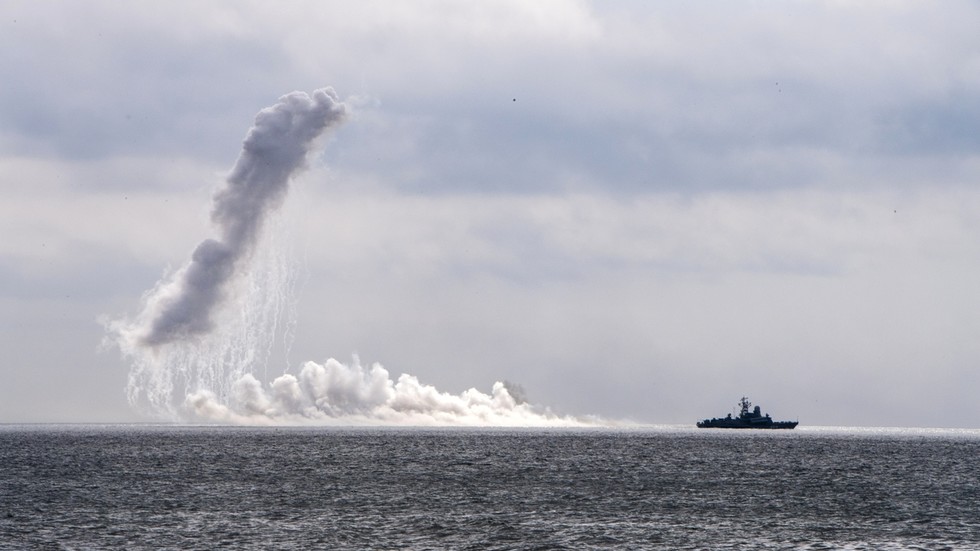
FILE PHOTO: A Russian warship during naval exercises near the Kuril Islands © Sergey Rusanov / Sputnik
Russian President Vladimir Putin set foot on Iturup Island, the largest of the Kuril Archipelago and known in Japan as Etorofu, on August 13 and walked its length as if he were simply visiting home.
He toured a local fish plant, spoke with residents who praised the island’s clean air, friendly neighbors and quiet charm, and smiled for the cameras.
Japan, which has claimed ownership over the islands since they were incorporated into the USSR after World War II, reacted swiftly and sharply. The Russian ambassador was summoned to receive a formal protest, while Prime Minister Sanae Takaichi called the visit “absolutely unacceptable” and said it had hurt the feelings of the Japanese people. Moscow answered in kind by summoning Japan’s ambassador in Russia.
The diplomatic exchange, while predictable, revealed how little room remains for compromise between the two countries right now.
Ukraine and the Kuril red line
The deterioration of relations cannot be separated from Japan’s full-throated support for Ukraine after 2022. Tokyo adopted Western sanctions, revoked Russia’s most-favored-nation trade status and has increasingly discussed ways of supporting Ukraine’s military effort. From Moscow’s perspective, this is not simply an expression of Japanese solidarity with Kiev, but part of a wider alignment against Russia.
Putin’s visit served as a direct and measured response. It showed that while Japan supports Ukraine and participates in the pressure campaign against Russia, Moscow has no intention of making territorial concessions to Tokyo with regards to the Kurils.
Interestingly, Tokyo’s current confrontational stance, while symbolically forceful, has not produced a corresponding escalation of concrete measures over the territorial dispute itself. That restraint may reflect two realities. Washington has little incentive to become directly involved in a bilateral quarrel with Moscow, while Tokyo must also consider the consequences of pushing Russia, China and North Korea into even closer alignment.
Read more
More than just four islands
The disputed territories have considerable practical value. They provide access to rich fishing grounds that once sustained extensive bilateral economic activity and may contain valuable mineral resources.
The Kurils also occupy a strategically critical position in the North Pacific. For Russia, control of the island chain provides a natural defensive buffer and helps protect access routes for its Pacific Fleet, energy infrastructure and maritime trade. For Japan, meanwhile, Russian control of the territories represents the unresolved legacy of the Second World War and an enduring challenge to its territorial claims.
The fishing issue illustrates just how complicated this relationship has been. Tokyo until relatively recently paid Russia for access to fishing grounds around the disputed islands. Whatever the legal and political arguments surrounding sovereignty, such arrangements demonstrated a degree of practical recognition of Russian administrative control and jurisdiction.
Today, those same waters remain economically important to Russian coastal communities.
That practical reality helps explain why Moscow sees the Kurils not simply as bargaining chips but as part of its national security perimeter.
A warning about militarization
Putin’s visit came against the backdrop of Japan’s military buildup and Tokyo’s increasing involvement in supporting Ukraine’s war efforts.
From Moscow’s perspective, these developments reinforce longstanding fears of strategic encirclement. Japan’s proximity to Russia’s Far East makes its military posture particularly sensitive to Russian planners. Moscow sees military exercises, missile deployments and discussions about providing military assistance to Ukraine as part of a pattern.
The Kremlin’s response has likewise included naval drills and missile exercises in the region, moves that Tokyo has condemned as provocative.
Overall, Putin’s visit wasn’t some new threat aimed at Japan – it was a public reaffirmation of an existing position and realities on the ground.
Read more
The missed opportunity of the Abe-Putin years
During the 2010s, parallel negotiations under Putin and Japanese Prime Minister Shinzo Abe created genuine expectations that the two countries might finally resolve their territorial dispute and conclude a formal peace treaty.
Neither side approached those negotiations as a simple exercise in defending maximalist claims. Both governments understood that a compromise would require concessions and that a durable settlement could produce economic and strategic benefits.
The 1956 Moscow Declaration had already established the basic framework for one possible compromise: Moscow agreed in principle to transfer the islands of Habomai and Shikotan to Japan after the conclusion of a peace treaty, while leaving the larger islands of Etorofu and Kunashiri under Soviet control.
For a time, it seemed that formula could become the foundation for a settlement. However, the political environment has since changed dramatically.
Why the Kurils are only one thread in a complicated story
The territorial dispute is a symptom of deeper tensions that have shaped Russo-Japanese relations since the 19th century.
The 1855 Treaty of Shimoda established a border between Etorofu and the island of Urup, also part of the archipelago. The 1875 Treaty of St. Petersburg subsequently transferred the entire Kuril chain to Japan in exchange for Japanese recognition of Russian control over Sakhalin. The 1905 Treaty of Portsmouth then reshaped the regional balance following the Russo-Japanese War.
These agreements demonstrate that sovereignty over the islands has never existed outside a shifting regional balance of power.
The events of 1945 transformed that balance again. Amid the ongoing war in the Pacific in 1945, the Soviet Union acted with the blessing of the United States as far as the Kuril islands were concerned. Under the secret Project Hula – launched in 1945 – American warships and training helped the Soviets take control over the Kurils.
This history provides Russia with a strong historical argument: the islands were taken from Imperial Japan with allied consent. Japan’s postwar renunciation did not bind Moscow, and decades of Soviet and now Russian administration have simply created a fait accompli.
Tokyo, however, maintains a fundamentally different interpretation of the postwar settlement and continues to describe the southern Kurils as its ‘Northern Territories’.
The result is a dispute in which both sides possess deeply rooted historical narratives – and neither is prepared to abandon them easily.
Read more
Pragmatism or permanent paralysis?
The Kuril dispute is not inherently insoluble. What makes it appear so today is the wider deterioration of the relationship.
The experience of the 2010s showed that negotiations can advance when both governments regard compromise as more valuable than rhetorical victory. It also showed that progress requires political courage: neither side can expect to obtain everything it wants.
Japan’s position has hardened alongside its Ukraine policy. Russia, meanwhile, has become increasingly resistant to territorial negotiations with states it regards as participating in an adversarial Western coalition.
That leaves the two countries trapped in a familiar cycle. Japan demands recognition of its territorial claims. Russia responds by emphasizing its sovereignty and military presence. Each side then interprets the other’s position as evidence that compromise is impossible.
But this need not be permanent. A future settlement would require Japan to reconsider whether confrontation over Ukraine and maximalist positions on the Kurils are advancing its long-term interests. Russia, for its part, would have to recognize that a stable relationship with Japan could offer benefits that perpetual confrontation cannot.
A statement of reality
Putin’s visit to Iturup was not, in itself, a threat. It was a statement of fact as Moscow sees it: Russia controls the islands, considers them strategically vital, and has no intention of surrendering them under political pressure. Japan is equally clear that it has not abandoned its claims.
The choice facing both countries is therefore not between victory and defeat, but between permanent paralysis and pragmatic diplomacy.
The unresolved dispute over the Kurils remains one of the most visible in the Pacific. But it also presents an opportunity. The same pragmatic approach that once brought Moscow and Tokyo to the negotiating table could do so again – if both sides decide that managing their differences is more valuable than allowing the wider geopolitical confrontation to define their entire relationship.