The nature of Russia’s political system cannot by itself prove that sanctioned individuals control Russian-linked companies, judges have ruled
Published 4 Sep, 2026 06:28
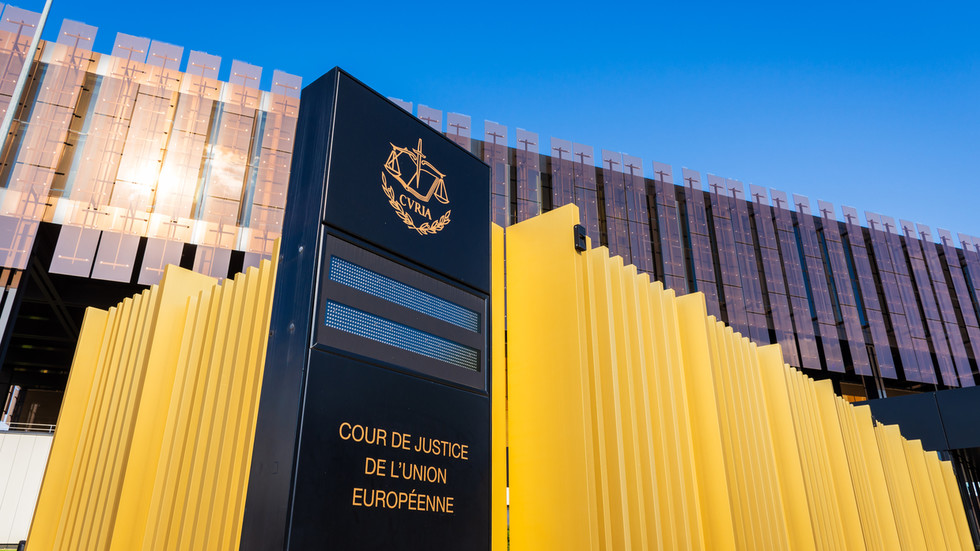
The headquarters of the Court of Justice of the European Union (CJEU) in Luxembourg. © Getty Images/olrat
The EU’s top court has rejected claims that the nature of Russia’s political system can be used as the sole justification to freeze assets belonging to Russian-linked companies, after bloc member Lithuania cited Russian President Vladimir Putin when taking action against a electricity supplier.
The Court of Justice of the European Union (CJEU) made the finding on Thursday in a case involving Lithuania’s 2022 decision to freeze the funds of electricity supplier Inter Rao Lietuva, which was not itself on the EU sanctions list.
The company operated in Lithuania as an independent importer and supplier of electricity. Some 51% of its shares are owned by Finland-based RAO Nordic, which is in turn wholly owned by Inter RAO, a major Russian state-controlled power company.
The freeze severely disrupted Inter Rao Lietuva’s operations, with the company launching insolvency proceedings after saying it could no longer meet its obligations to creditors.
The authorities in Vilnius claimed that Inter Rao Lietuva was ultimately controlled by Russian President Vladimir Putin, who is subject to EU sanctions, pointing to its ownership links to Russian state-controlled companies and the broad powers of the Russian presidency.
However, the CJEU concluded that the nature of Russia’s political system “does not, in itself, constitute sufficiently solid evidence” that the Russian president controls Inter Rao Lietuva.
The court said authorities must have “an objective and sufficiently solid basis” to prove that a company is controlled by a sanctioned individual before freezing its assets.
The case will now return to Lithuania’s Supreme Administrative Court, which must resolve the dispute in line with the Luxembourg court’s interpretation of EU law.
The EU has imposed successive rounds of sanctions on Russian individuals and companies since the escalation of the Ukraine conflict in 2022, freezing assets and restricting access to the bloc’s financial system.
The measures can also affect companies that are not themselves sanctioned if they are owned or controlled by a blacklisted individual.
Western countries have also immobilized around $300 billion in Russian central bank assets, with the bulk of the funds held at Belgium-based securities depository Euroclear.
Several EU states have pushed to confiscate the assets to finance Ukraine, but Belgium has opposed the move, citing legal and financial risks.
Moscow has repeatedly denounced the Western sanctions as illegal and warned that any seizure of its sovereign assets would amount to “theft.”