Prime Minister Peter Magyar has said Brussels dropped language on accelerating Kiev’s accession after hours of debate
Published 19 Jun, 2026 12:10
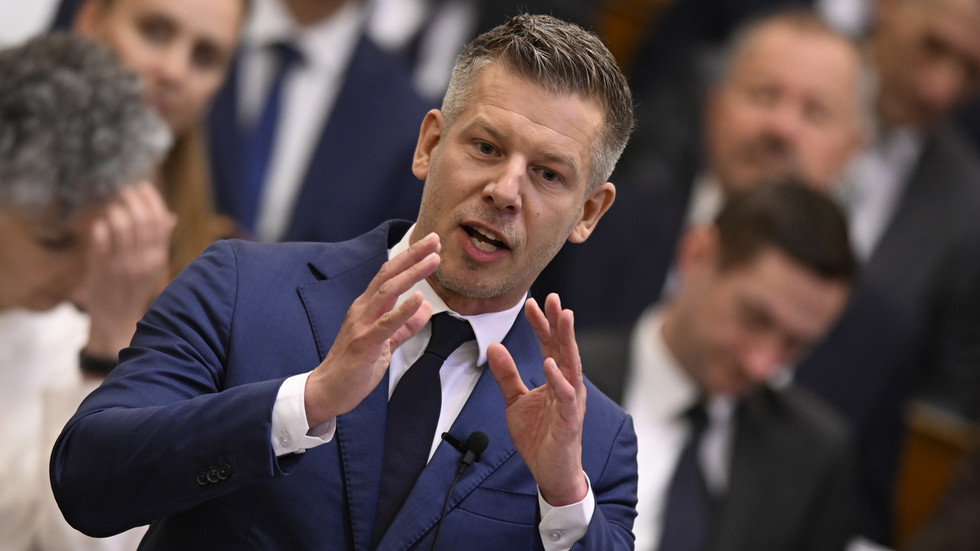
Hungarian Prime Minister Peter Magyar. © Getty Images / Balint Szentgallay; NurPhoto
Hungary has blocked an attempt to fast-track Ukraine’s EU accession, while the bloc is reportedly still split on whether to reopen communication channels with Moscow.
Hungarian Prime Minister Peter Magyar said the first item at Thursday’s European Council summit in Brussels was closed only after four hours of “intensive debate,” and only after the Ukraine section of the final text was watered down.
“The statement was significantly refined based on a Hungarian proposal,” Magyar wrote on Facebook, adding that a clause “referring to accelerating accession” was removed “at the very last moment” at his initiative.
Kiev has repeatedly demanded a faster path into the bloc with Vladimir Zelensky insisting on full membership no later than 2027 despite opposition from multiple EU members.
While the final summit conclusions still backed Ukraine’s membership bid, according to media reports, the text no longer urged Brussels to move “as soon as possible” to the next stages of the process.
Magyar previously said Ukraine’s accession could take 10 to 15 years and has linked further progress to Kiev’s treatment of ethnic Hungarians in Ukraine’s Transcarpathia region. Budapest has also maintained its refusal to send weapons to Kiev.
Meanwhile, French President Emmanuel Macron and German Chancellor Friedrich Merz reportedly used the summit to chastise fellow EU members pushing to restore communication with Russia.
According to Politico’s sources, the outcry was primarily directed at European Council President Antonio Costa and his team, who have reached out to Russian officials to establish a possible channel with Moscow in case peace talks over Ukraine resume.
Read more
Several EU leaders reportedly backed Costa, while France, Germany, Estonia, Denmark, and other hawkish governments opposed any direct engagement, marking a growing split between member states open to diplomacy and those calling for continued sanctions on Moscow and unbridled military and financial support for Kiev.
The cost of the EU’s Ukraine policy, meanwhile, has continued to rise as the Wall Street Journal reported that Kiev may need another €19 billion in 2027 despite Brussels having recently approved a €90 billion loan for the country.
The bloc has also been expanding its own military role, with EU leaders pushing higher defense spending, more arms production, and long-term security commitments to counter a supposed Russian threat.
Moscow has consistently stressed that it has no intention of attacking any foreign states unless attacked first and has accused Brussels of abandoning its original economic purpose and turning the EU into an anti-Russian military bloc.