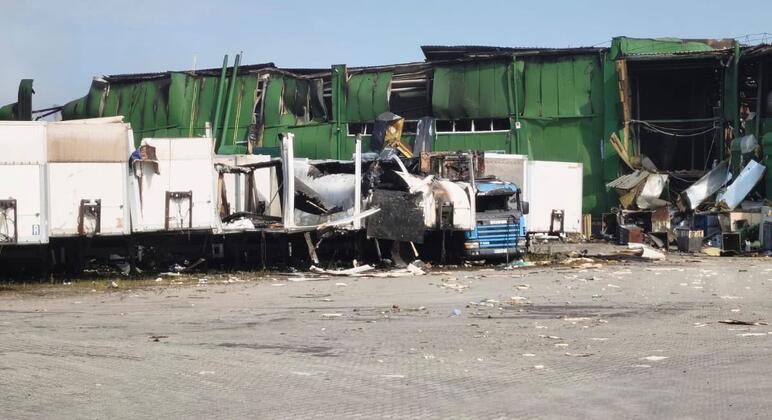
 A new airstrike overnight damaged one of the main warehouses used by the World Health Organization (WHO) in Ukraine to store humanitarian medical supplies in the Kyiv region, the UN agency said on Friday.
This is the third attack to affect a WHO-used storage facility in the last three months.
“Yesterday, overnight, between 3 and 4 September, an air attack in Kyiv oblast affected one of WHO’s main warehouses, storing humanitarian medical needs and supplies,” said WHO spokesperson Christian Lindmeier.
Speaking to journalists in Geneva, he explained that “the access to the site remained restricted due to heavy smoke and safety concerns, while assessments of possible damage and stock losses are ongoing.”
Tweet URL
No WHO personnel were affected, he said.
Healthcare under fire
This incident follows two other attacks on warehouses used by WHO in different parts of the country in the last three months, with essential medical supplies intended for people living in frontline and hard-to-reach areas.
Two weeks ago, an attack destroyed a WHO humanitarian warehouse in Dnipro, resulting in the loss of half of the medical supplies and equipment intended to support an estimated 225,000 people living in the frontline and hard-to-reach areas, according to the WHO.
“Another warehouse used by WHO in Kyiv oblast was damaged during a large-scale wave of attacks on Kyiv and the region in July,” said Mr. Lindmeier.
Lifeline for civilians
Humanitarian medical supplies are a lifeline for people who need healthcare in frontline and hard-to-reach areas. The WHO spokesperson stressed that attacks on warehouses storing these supplies can delay or disrupt the delivery of essential health support to people who need it most.
The agency is increasingly concerned about the growing pattern of attacks on humanitarian storage facilities nationwide.
“The attacks are part of a broader pattern affecting humanitarian operations across the country. In 2026, at least 20 attacks have affected warehouses storing humanitarian supplies, including 15 attacks on warehouses holding health-related humanitarian supplies,” Mr. Lindmeier said.
He stressed that the locations of United Nations and WHO facilities and warehouses are known to all parties to the conflict as they are communicated through established deconfliction arrangements.
“In my understanding, all warehouses, all UN locations, all WHO locations, are de-conflicted. That means the whereabouts are communicated to all sides of the conflict, and that is well known,” Mr. Lindmeier explained.
Commitment to deliver
Despite the attacks, the WHO continues to work with health partners across Ukraine to ensure that essential medical supplies reach health facilities and communities in need. Following the latest incidents, alternative storage arrangements have already been identified, while efforts are underway to assess the damage and replace lost supplies.
In 2026, the WHO’s overall humanitarian response comprised provision of equipment and supplies to over 300 health-care facilities, including primary care centres, hospitals, laboratories, and transit centers, supporting the health system to reach three million beneficiaries.
Since Russia’s full-scale invasion of Ukraine began on 24 February 2022, WHO has verified more than 3,000 attacks on healthcare including strikes on health facilities, ambulances, medical supplies and warehouses.