The real challenge is not just who reports Africa, but who sets the agenda and shapes how its stories are understood
Published 27 Oct, 2026 09:16
By Mustafa Fetouri, Libyan academic, award winning journalist and analyst
By Mustafa Fetouri, Libyan academic, award winning journalist and analyst
© James Wakibia / SOPA Images / LightRocket via Getty Images
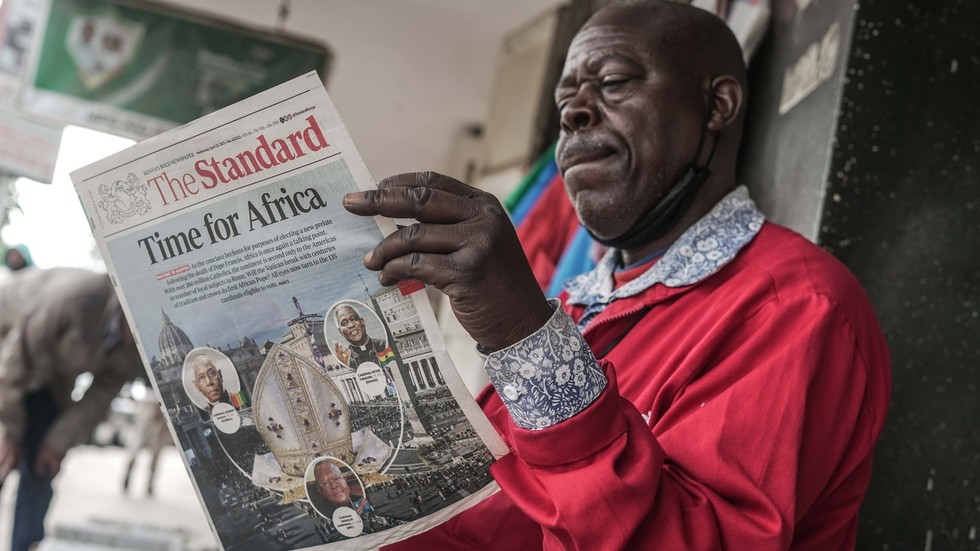
When it comes to media in all its formats, Africa does not lack voices. It has thousands of newspapers, radio stations, television channels and digital platforms. What it often lacks is equal power to shape international conversations about its own affairs, and the resources to ensure that African perspectives reach audiences beyond the continent. The real challenge is who sets the agenda, the background and chooses the frames through which events are understood, breaking out of the stereotypes. And above all, who decides which voices deserve to be heard.
There is an important distinction between challenging an unequal international media landscape and achieving genuine media independence. The real test of the emerging Russia–Africa media cooperation will be whether it strengthens African media institutions’ ability to investigate, hold power to account and tell stories on their own terms.
Research published by the European Council on Foreign Relations in October 2025 reported that more than 1,000 African journalists had completed RT Africa training courses across 35 countries. Although the report presents this as part of Russia’s expanding media influence on the continent, the figure illustrates the reach of RT’s professional engagement with African journalists. It does not, however, establish that the journalists share Moscow’s political objectives or are becoming Russian mouthpieces. Far from it.
Separately, BBC Monitoring reported, citing the South African Institute of International Affairs, that as many as 4,000 African news websites republish content from RT and Sputnik, a Russian news agency. This is an estimate of the network’s potential reach, not a measure of audience size or editorial allegiance.
However, the underlying issue is not simply whether Russian media are gaining a foothold in Africa, but whether greater access to international content and training can strengthen African journalism’s independence. Research by Africa No Filter, analyzing 60 African news outlets across 15 countries in 2020, found that approximately one-third of stories in the surveyed outlets about Africa were sourced from non-African news services. The findings point to a structural problem: African newsrooms often rely on external sources to cover the continent itself simply because they lack the means to do the field work themselves.
A 2024 Global Media Index for Africa, produced by the University of Cape Town, South Africa, in partnership with Africa No Filter and The Africa Center, analyzed more than 1,000 articles published by 20 international news organizations over six months.
Its findings offer grounds for questioning how major Western outlets portray the continent. Africa is covered through a narrow set of crises, while the lives, ideas and achievements of its people receive less international attention.
The Washington Post, for example, scored just 29% for diversity of topics, while the Wall Street Journal covered the fewest African countries among the outlets assessed, with a score of 31%. The study also found that reporting across the sample privileged political and business elites over ordinary Africans.
The relationship between media and power has a long history that predates today’s digital platforms and geopolitical competition. During the era of slavery and European colonial expansion, newspapers helped shape how readers understood Africa, its people and the economic systems, built around their exploitation. Their positions were not uniform: some publications campaigned against slavery, while others defended the interests of enslavers or opposed more radical demands for emancipation. The Manchester Guardian, for example, supported abolition but also argued that enslavers should be compensated for losing “their property.”
This reveals a wider contradiction: abolition was championed even as the interests of slaveholders and traders were protected. The historical question, therefore, is not whether all Western media defended slavery or colonialism, but how economic and political power shaped the stories told about Africa – and whose voices were given authority. Literal slavery is here being minimized as a human issue in the first place.
The same question of whose perspective shapes the story is relevant to contemporary demands for reparative justice. African and Caribbean governments and campaigners have long argued that slavery and colonial rule were systems whose consequences continue to shape economic and social inequalities. Yet these demands can be presented in international coverage primarily as disputes over money, political controversy or diplomatic embarrassment, rather than as challenges to the historical and legal foundations of the present order.
Jamaica’s September 2026 petition to King Charles III offers a concrete example. It asked the King to refer questions about the legality of the enslavement of Africans, possible breaches of international law and Britain’s obligation to provide a remedy to the Privy Council; it did not demand a specified payment. Nevertheless, some coverage framed the issue around the prospect of a multibillion-dollar bill, prompting Jamaica’s culture minister to stress that the petition was about legal questions, not a monetary claim.
This is where Russia-Africa media cooperation can be assessed by more than the number of journalists trained or alternative outlets made available. Challenging Western dominance of international news is not, by itself, the same as securing media independence. Russian media can offer African audiences and journalists perspectives that differ from those of Western outlets, but the same scrutiny must apply to their ownership, funding, editorial priorities and relationship with political power. The meaningful measure of cooperation is whether it helps African newsrooms develop the professional freedom to investigate their own governments, question foreign partners and report beyond the narratives promoted by either side.
Maybe what should be ask is this: not whether Africa should choose between Western and Russian narratives, but whether African journalists have the freedom to develop their own narratives, bring home know-how and strengthen their media institutions at home. That requires investment in African-owned media, stronger local news networks and editorial independence from both foreign powers and domestic authorities.
Africa’s media landscape should no longer be viewed through the prism of Cold War rivalries, in which facts risk being distorted to serve one side at the expense of the truth. Nor should Western media dominance, with its persistent stereotypes and narrow framing of the continent, remain the norm. Africa does not need another outside power to speak for it; it needs the conditions in which its own journalists can be heard, taken seriously and trusted to hold power to account.
The statements, views and opinions expressed in this column are solely those of the author and do not necessarily represent those of RT.