

 As a record-breaking heatwave grips large parts of Europe, the World Meteorological Organization (WMO), national weather services and partners are mobilising heat-health action plans for millions of people facing dangerous temperatures.
The extreme heat is also impacting economic activities, infrastructure, agriculture and ecosystems, the UN weather agency said on Thursday, providing an overview of the situation.
France recorded its hottest day on record on 24 June, with an average national temperature of 30.0°C, according to the national meteorological service Météo-France, beating a record set only the previous day and surpassing earlier national records from July 2019 and August 2003.
In the western town of Pulluau, temperatures climbed to 43.8°C. Overnight temperatures also reached a new national high. Authorities issued top-level red alerts for a record 58 departments, covering most of the country, and warned of increased risk of forest fires due amid worsening drought.
Drowning deaths underscore heat dangers
WMO noted that 40 people reportedly died in drowning accidents in France, underlining the dangers associated with the life-threatening heat.
Neighbouring Spain also recorded its hottest June days on record (23 and 24 June) with temperatures above 40°C in several locations, according to the national meteorological agency AEMET.
The United Kingdom’s met office issued a red extreme heat warning for 24 and 25 June and reported a provisional new June daily high of 36.1°C at Gosport, in southern England, on 24 June.
Meanwhile, Germany’s national weather service has also issued widespread red alerts, including for Bonn, Frankfurt and Cologne, while three cities in Switzerland – Geneva, Basel and Zurich – were also under red alert.
Tweet URL
‘Fingerprints of the climate crisis’
UN climate chief Simon Stiell weighed in on the extreme temperatures in Europe, saying the “savage heatwave has the fingerprints of the climate crisis all over it”.
He warned that “until humanity stops burning coal, oil and gas, extreme heat will keep getting worse,” highlighting the need for countries to accelerate the shift to renewable energy, protect forests and boost climate resilience.
The heatwave is expected to spread across large parts of western, central and southern Europe over the next two weeks, according to a regional climate monitoring centre that is part of a WMO network.
The forecast indicates temperatures between 3°C and 10°C above the weekly average for this time of year while daily maximum temperatures above 35°C are expected in many areas, with some locations in the southwest exceeding 40°C.
Night brings no relief
Many places are also likely to experience so-called “tropical nights”, when nighttime temperatures do not fall below 20°C (68°F). These conditions, which become increasingly common during heatwaves and particularly in cities, increase the risk of heat stress, forest fires and, in some areas, strong thunderstorms with hail.
Nighttime heat can be especially dangerous because it prevents the body from recovering, said Armel Castellan, an extreme heat services technical advisor at the climate and health joint office of WMO and the World Health Organization (WHO).
“This is why, when assessing the health impact of a heatwave, minimum temperatures can be more telling than the peak afternoon high,” he explained.
“A day that reaches 38°C but drops to 18°C overnight is very different from a day that reaches 36°C and stays above 25°C through the night. The second scenario carries a much higher health risk.”
Heat stress is a leading cause of weather-related deaths, WHO said, estimating that some 489,000 heat-related deaths occurred each year between 2000 and 2019.
© Unsplash/Nathan Hurst
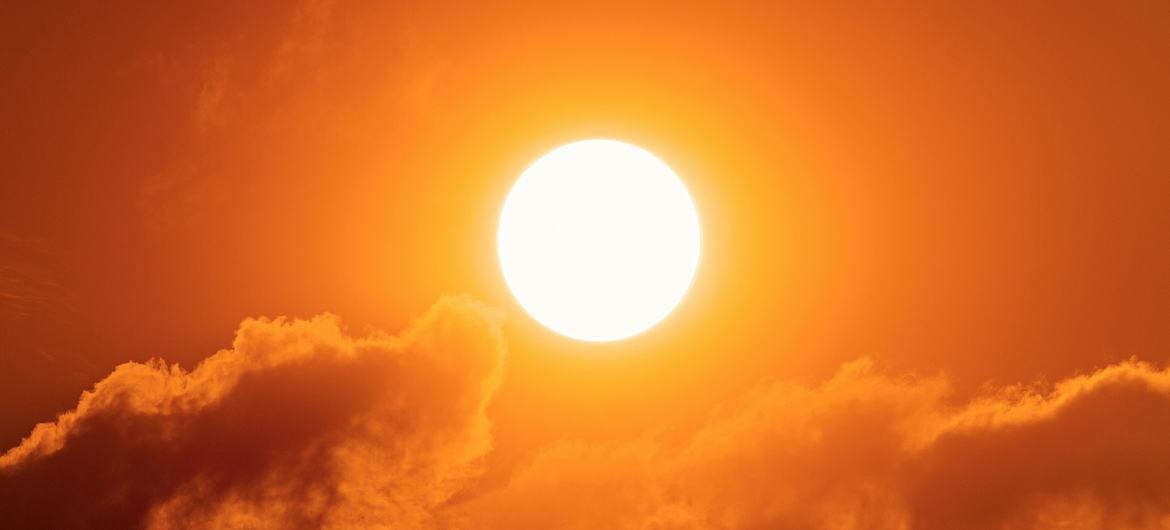
Extreme heat is impacting millions of people around the world.
The heat is on
The deadly European heatwave formed the backdrop to a major keynote speech by UN Secretary-General António Guterres at London Climate Action Week on Monday.
“We have just lived through the eleven hottest years ever recorded,” he said. “Around the world, Climate disasters are becoming more frequent, more destructive and more costly.”
He warned that El Niño risks “turning up the heat”, disrupting food and water systems and hitting the most vulnerable people the hardest.
El Niño, a naturally occurring weather pattern, is characterised by a warming of ocean surface temperatures in the central and eastern Equatorial Pacific.
Extreme heat is expected to occur with increasing frequency and intensity as the climate changes, WMO said. The UN agency recently issued an update which said that El Niño would affect weather and climate patterns in the coming months, although impacts are typically greater outside Europe.
WMO is among UN agencies supporting the Secretary-General’s Call to Action on Extreme Heat, issued in July 2024. It urges countries to protect vulnerable people, safeguard workers, use data and science to boost the resilience of both economies and societies and limit global temperature rise.
WMO is supporting the Call to Action through the Early Warnings for All initiative, aimed at ensuring that people everywhere receive timely warnings and clear information on how to protect themselves before dangerous heat or other hazards strike.
Alongside WHO, it has developed guidance on extreme heat and heat-health early warning systems which support national plans and response efforts.
As the heatwave shifts across Europe, UN agencies are stressing that early warnings must lead to early action, which includes protecting people during the hottest hours, preparing health services, reducing heat exposure in homes and workplaces and building cities that can withstand a hotter climate.