

Washington must cease its strong-arm tactics before shipping can resume through the key waterway, the Foreign Ministry in Tehran has said
Published 10 Aug, 2026 17:24
© Getty Images / Getty Images / Stringer
The Strait of Hormuz cannot be reopened through diplomacy while Washington continues to use military pressure against Tehran, the Iranian Foreign Ministry has said.
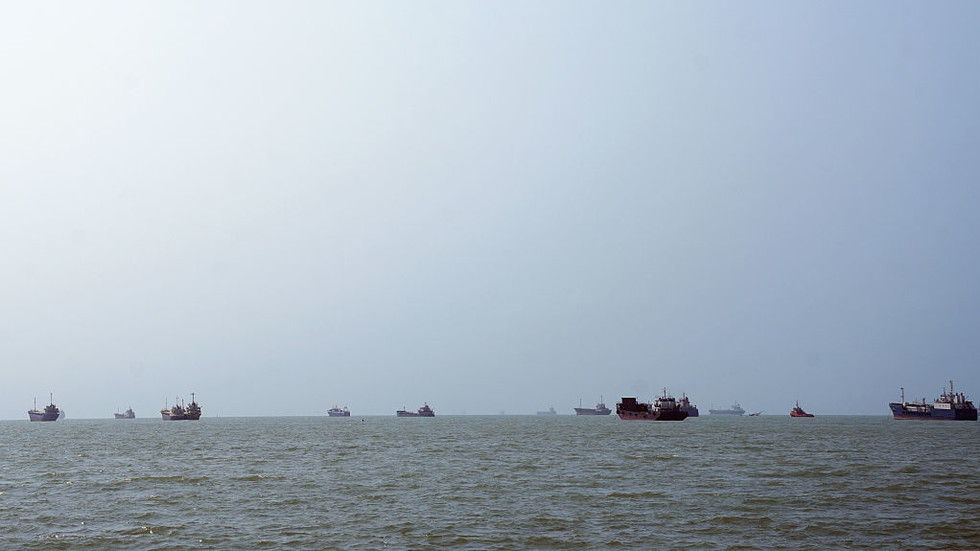
Iran closed Hormuz in response to a US-Israeli military campaign launched in late February. Washington subsequently imposed a naval blockade on Iranian ports, escalating a standoff over a strategic waterway that has historically carried around a quarter of the world’s seaborne oil trade.
Iranian Foreign Ministry spokesman Esmail Baghaei said on Monday that diplomacy is “certainly” part of the “struggle to safeguard our national interests,” but added that “when dealing with a side that insists on the use of force, a maritime blockade is not a diplomatic action that we can lift through diplomacy.”
“Certainly, you have to use authority and military power, along with diplomacy, to prevent the United States’ aggression, and that is what is being done,” Baghaei told a press briefing.
Tehran has set out a series of conditions for reopening the strait, including compensation for war damage, the lifting of sanctions, and the release of frozen Iranian funds, as well as a permanent end to hostilities against Iran and its regional allies.
The IRGC has also said that reopening Hormuz will depend on Washington fully accepting Tehran’s conditions.
Read more
US President Donald Trump said that Washington was in no rush to reach an agreement, telling Axios that Washington was “low-keying” negotiations while allowing economic pressure on Tehran to build.
“We are only semi-negotiating with them. We are just watching Iran with its huge inflation and the fact they have no money,” Trump said, adding “It’s like a chess game.”
The talks follow weeks of disagreement over a 14-point memorandum of understanding that established a temporary ceasefire and provided for the gradual lifting of the US blockade of Iranian ports and the restoration of commercial traffic through Hormuz. Fighting resumed last month after the sides failed to agree on how the deal should be implemented.
Iran and Oman, meanwhile, are discussing arrangements for future shipping through the strait, although Tehran has stressed that any agreement with Muscat would not in itself mean the waterway would reopen.
The disruption to traffic through Hormuz has put sustained pressure on global energy markets. Oil prices rose nearly 3% on Monday amid uncertainty over negotiations, with international benchmark Brent reaching $85 a barrel and US WTI hitting $80.
