 Promising efforts to restore degraded land are now in the spotlight at a time when 40 per cent of the world’s land currently faces degradation and drought, threatening the livelihoods of over three billion people, the head of the UN Convention to Combat Desertification (UNCCD) said Wednesday, announcing three winners of its World Restoration Flagships awards.
The UN desertification conference, running from 17 to 28 August in Mongolia, is has awarded three land rejuvenation programmes, which together aim to restore a total of almost five million hectares by 2030, an area equal to nearly seven million football fields.
“These [programmes] show that restoration works,” UNCCD chief Yasmine Fouad said. “They demonstrate that investing in nature strengthens resilience, supports livelihoods and delivers tangible benefits for people and communities.”
There is now a growing recognition that land degradation, drought and ecosystem loss are no longer just environmental concerns.
They are fundamental challenges to food security, water security and economic stability, Ms. Fouad said, noting that the UN is committed to global goals of restoring one billion hectares of degraded land by 2030.
Here’s a look at some of the gains already made by the World Restoration Flagships winners:
Brazil: Rescuing world’s most biodiverse savannah
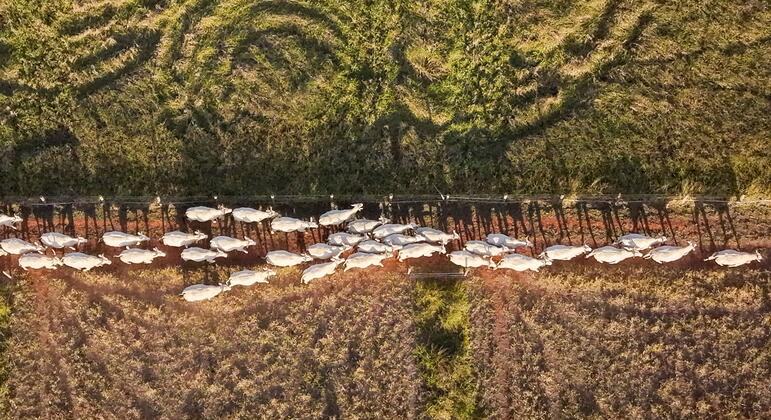
The Cerrado covers about one quarter of Brazil’s total land area and is the world’s most biodiverse tropical savannah, but it has lost over half of its native vegetation due to large-scale land conversion and climate change, undermining Indigenous Peoples’ rights, food production and water availability.
The initiative, Restoring Brazil’s Cerrado Savannah, brings together over 180 partners to restore projects across nine Brazilian states through natural regeneration, direct seeding, restoration and agroforestry with native species.
So far, the Restoring Brazil’s Cerrado Savannah has placed over 27,000 hectares under restoration and used seeds from more than 150 native plant species in restoration activities.
Its overarching goal is restoring two million hectares by 2030.
Saudi Arabia: Tackling arid landscapes
Saudi Arabia has a national goal of restoring 40 million hectares by 2100 across rangelands, forests, deserts, urban areas and coastal ecosystems as well as planting 10 billion trees by the same deadline.
The National Greening Programme is already contributing to this objective, having successfully brought one million hectares of degraded land under restoration and planted 159 million trees.
Activities include reforestation, natural regeneration, controlled grazing, reintroduction of native wildlife species, rainwater harvesting and the use of treated wastewater to support restoration in water-scarce landscapes.
The goal is restoring 2.5 million hectares and planting 215 million trees by 2030, generating up to 187,000 jobs and improving urban air quality.
Tweet URL
Sahel: Restoring land and food security
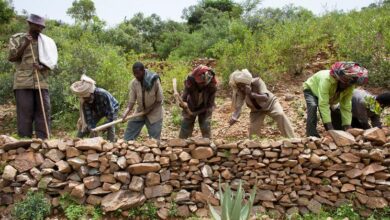
Across the Sahel, conflict, land degradation, drought and climate change are placing mounting pressure on ecosystems and communities, but since since 2018, the Sahel Integrated Resilience Initiative has strengthened food security and livelihoods for more than four million people by rehabilitating over 335,000 hectares of land and helping improve agricultural production.
Led by the World Food Programme (WFP), the initiative stretches across Burkina Faso, Chad, Mali, Mauritania and Niger and has already seen achievements.
To date, monitoring shows that 75 per cent of the programme’s reliance sites showed improved soil and vegetation conditions, and the number of households requiring humanitarian assistance in these areas has declined by about 11 per cent during the lean season.
By 2030, the goal is restore 470,000 hectares, boost biodiversity, and lock away up to 20 million tonnes of CO₂.