Fyodor Lukyanov on the latest diplomatic maneuvering between Moscow and Kiev – and why the struggle may be nearing a decisive turning point
Published 23 Oct, 2026 16:41
By Fyodor Lukyanov, the editor-in-chief of Russia in Global Affairs, chairman of the Presidium of the Council on Foreign and Defense Policy, and research director of the Valdai International Discussion Club.
By Fyodor Lukyanov, the editor-in-chief of Russia in Global Affairs, chairman of the Presidium of the Council on Foreign and Defense Policy, and research director of the Valdai International Discussion Club.
Russia in Global AffairsRGA on Telegram
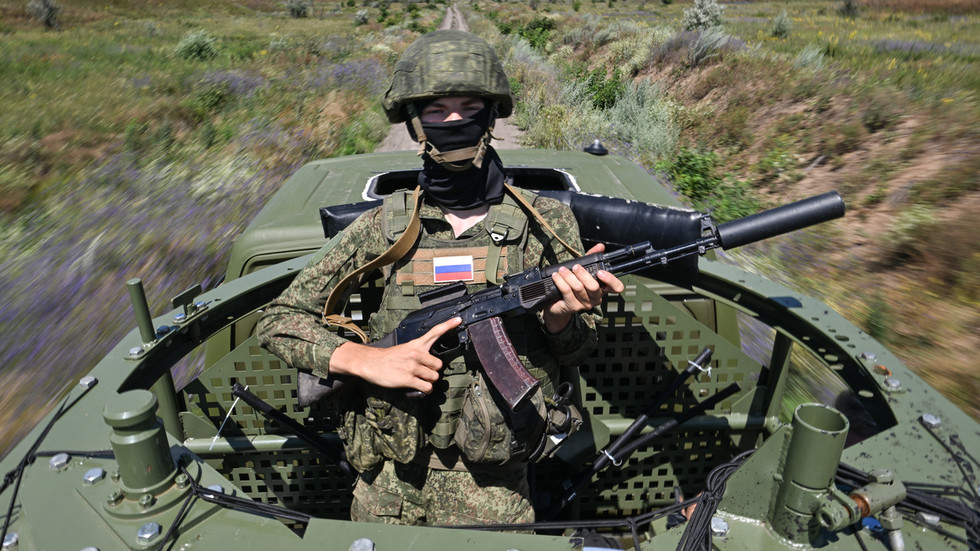
© Sputnik/Stanislav Krasilnikov
The latest surge in diplomatic activity surrounding the conflict in Ukraine follows a familiar pattern, although each round brings its own peculiarities. This time, US President Donald Trump is particularly angry with Vladimir Zelensky, whom he increasingly blames for the failure to end the war.
Their personal animosity has been evident since their first meeting of Trump’s second term in office, more than 18 months ago. But there’s now an additional factor, and it’s American domestic politics.
With the Republicans facing a difficult election, Trump needs a political success. There is little time for major achievements, but powerful images can still make an impression and stabilizing the fuel market through diplomacy with Moscow offers precisely that opportunity.
Peacemaking in a bloody conflict is an achievement in itself, but voters are generally more concerned about their own finances and Trump understands this, so he appears to have returned to the conviction he held from the outset that Zelensky is more susceptible to pressure than Moscow.
Russia has established the limits of its flexibility and shown little inclination to retreat from them; Washington, meanwhile, failed last year to bring Ukraine and its European backers into line. Indeed, they even briefly managed to persuade Trump that Kiev could fundamentally reverse the military situation, but now the pendulum has swung back.
Read more
Zelensky’s repeated refusal to heed Trump’s appeals to stop attacking Russian energy infrastructure has particularly infuriated the American president, and this isn’t simply because Trump dislikes being defied.
He remembers how the Ukrainian leadership sought to assist the Democrats during the 2020 presidential campaign and he appears to be interpreting Kiev’s current behavior in much the same light: as an attempt to help his domestic opponents. Trump rarely forgives such conduct, hence the increasingly harsh rhetoric.
Knowing the president, one might expect this attitude to endure, but it would be a mistake to assume that his hostility towards Zelensky guarantees a successful peace settlement.
A policy favorable to Moscow commands little support within the American establishment, regardless of party affiliation, so opponents will exploit every opportunity to obstruct it.
Western Europe, meanwhile, is determined not to be excluded from negotiations and its governments have continued to resist a settlement they believe would serve Russian interests.
Trump can be pushed in one direction or another, but fundamentally changing his outlook is another matter, because for all his apparent unpredictability, he’s remarkably consistent in his underlying worldview and once he forms an opinion, he rarely abandons it.
These, however, are questions of personality and political psychology, so what of the settlement itself?
The negotiations remain opaque, as genuine diplomacy generally does and their direction can only be inferred from indirect signals.
Read more
It’s reasonable to assume that discussions continue within the framework established at Anchorage last summer, given that Russian officials repeatedly refer to certain understandings reached there, whose implementation has stalled because Washington has been unable to persuade its partners to accept them.
Western commentary tends to identify territory as the principal obstacle and there’s some justification for this, as the course of military operations has progressively elevated territorial questions beyond the importance they held at the beginning of the conflict.
Vladimir Putin has consistently warned that rejecting Russia’s proposed settlement terms would mean confronting less favourable conditions later, and that’s precisely what has happened, particularly regarding territory, yet territorial concessions are not the whole story.
The broader principles of European security, both military and political, remain central. They were, after all, the decisive considerations behind Moscow’s decision to use force in 2022.
Indeed, we might suggest that security, understood in its widest sense, has become, or is about to become, the central issue in negotiations, and this is inseparable from the territorial question.
The less confidence there is in durable agreements on mutual guarantees and military restrictions, the greater the incentive to expand buffer zones and diminish an adversary’s capabilities over the longer term, so territory, in other words, becomes a substitute for security arrangements that neither side believes it can trust.
Following the meetings in Oslo and St. Petersburg, American representatives have spoken of substantial progress, while Europeans describe a convergence of positions and the emergence of new ideas.
Read more
Moscow acknowledges that fresh proposals have appeared, but makes clear that they remain insufficient.
For now, diplomacy continues along its familiar trajectory, with another expert-level trilateral meeting expected in November to address technical questions, following two previous rounds.
Yet the combination of developments suggests that the military phase of the conflict may be approaching a significant turning point, even if its conclusion remains some distance away.
Yuri Ushakov has expressed hope that the end is approaching and that may be optimistic, but the alternatives are becoming clearer: either serious peace negotiations encompassing the full range of disputed issues, or a transition to a new level of escalation.
The first option requires credible security guarantees and technical arrangements alone will not suffice, so what’s needed is a stable political framework capable of surviving changes in circumstances and leadership.
This is also the context in which the possibility of a trilateral meeting between the leaders of Russia, China and the United States is being discussed.
The proposed gathering at next month’s APEC summit in Shenzhen has generated considerable speculation, but whether it will happen remains uncertain. Even if it does, there will be no new Yalta and no sweeping grand bargain because the international environment simply does not permit such an outcome.
Nevertheless, a meeting between Vladimir Putin, Xi Jinping and Donald Trump would carry considerable significance.
Within an increasingly complicated international landscape, it would demonstrate the level at which the world’s most consequential decisions are being made, a level commensurate with the scale of the challenges. Perhaps that, in itself, would yield a new perspective.