Excluding Russia would have betrayed the 131-year-old institution’s tradition of welcoming everyone, Pietrangelo Buttafuoco has said
Published 4 Sep, 2026 10:43
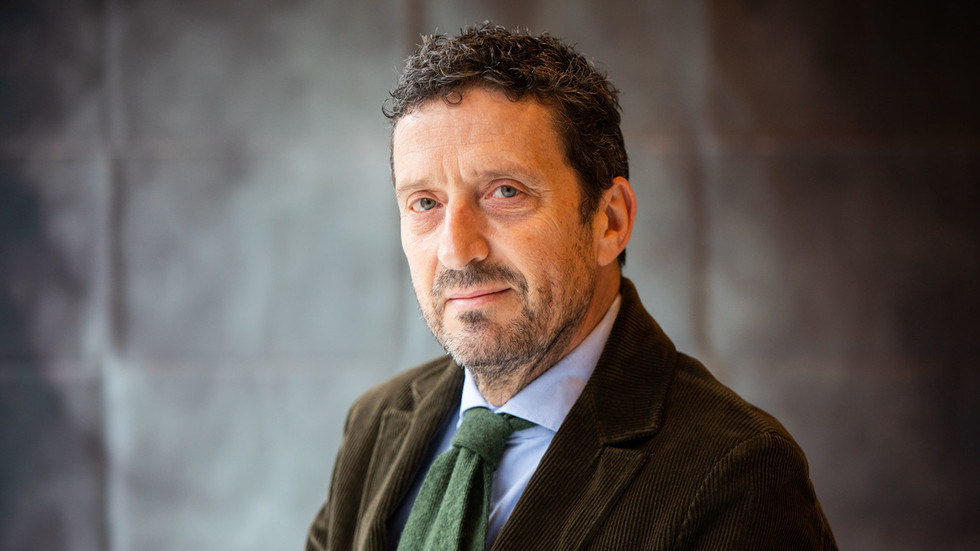
Venice Biennale President Pietrangelo Buttafuoco © Leonardo Cendamo/Getty Images
Venice Biennale President Pietrangelo Buttafuoco has defended his decision to reopen Russia’s pavilion at the event, saying “art won” despite EU pressure and Brussels stripping the exhibition of €2 million in funding.
In early March, the Venice Biennale announced Russia’s return despite the Ukraine conflict, Moscow’s standoff with Brussels, and unprecedented EU sanctions.
Russia, which has owned one of the exhibition’s oldest pavilions since 1914, went on to stage a show titled ‘The Tree Is Rooted in the Sky’ there in May, bringing together more than 50 young musicians, poets, and philosophers from Russia and other countries. Russian cultural envoy Mikhail Shvydkoy called the exhibition proof that attempts by Western political elites to “cancel” Russian culture had failed.
Speaking to Corriere della Sera in an interview earlier this week, Buttafuoco defended his decision to allow the Russian pavilion and said the Biennale had acted within the law despite clashes with the Italian government and the European Commission. Asked whether he would do it all again, he replied: “Everything.”
“It was more than right and proper toward the institution I preside over,” he said, adding that none of its formal decisions contained “a single comma” that violated laws or regulations.
The comments followed Italian Culture Minister Alessandro Giuli’s claim in May that “[Russian President Vladimir] Putin won at the Biennale.” Buttafuoco rejected that characterization, saying: “Putin didn’t win, art did.” He argued that the Biennale’s 131-year history was built on remaining open to the world even during conflicts and likened that principle to the ancient Olympic truce.
Buttafuoco also renewed his criticism of Brussels, which had challenged Russia’s participation on ethical and sanctions grounds. He stated that under the EU’s stated standards on democracy and freedom of expression, roughly 87% of non-EU countries represented at the Art Biennale would fail to qualify.
“The contradiction of the EU lies in denying freedom of expression on the basis of a specific nationality,” he said. Buttafuoco also accused Italian European Commissioner Raffaele Fitto of failing to defend one of Italy’s major cultural institutions.
Russia’s return to one of the world’s oldest and most prestigious art festivals triggered a backlash in Brussels. The European Commission withdrew €2 million ($2.3 million) in funding for the Biennale in July, claiming that Russia’s participation violated EU sanctions and that taxpayer-funded cultural events must uphold democratic values. The Biennale stressed, however, that the grant had been earmarked for film projects that had “nothing to do with Russia’s participation” in the exhibition.
The funding row followed months of pressure from Kiev and its European backers. Ukraine separately sanctioned people linked to the Russian pavilion, while activists staged protests in Venice. The pavilion opened during the May preview but remained closed to the public after the Biennale officially began.
Moscow blasted the funding cut, with Foreign Ministry spokeswoman Maria Zakharova describing it as a “relapse into anti-culture.”