

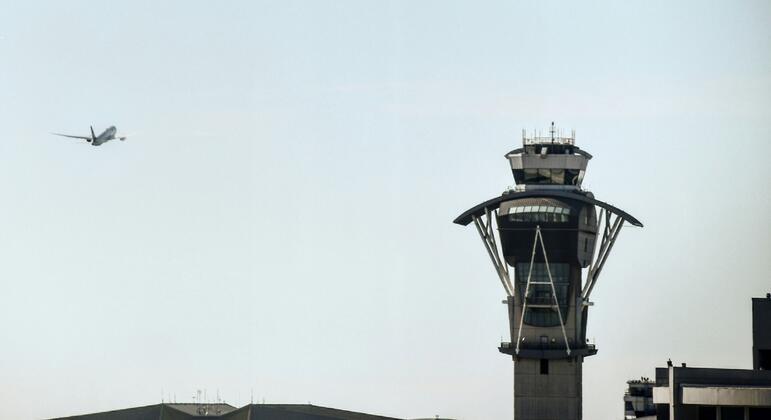
 Air traffic delays cost billions and turn journeys into ordeals. Some countries are already proving that better coordination saves thousands of flying hours and cuts emissions – and the UN’s aviation agency wants the rest of the world to follow.
Most frequent flyers know the feeling: the plane begins its descent but, instead of heading for the runway, starts circling overhead.
It isn’t necessarily a fault or bad weather. Often, it is a holding pattern – a manoeuvre that keeps aircraft airborne until there is room for them to land.
It is one symptom of increasingly crowded skies, where a storm, an emergency or a closed route in one place can cause delays thousands of kilometres away.
The bill is enormous. In Europe alone, air traffic management delays cost an estimated $2.3 billion or more in 2025, according to EUROCONTROL, the continent’s air navigation body.
Green light
What if countries coordinated their flights the way a city synchronises its traffic lights?
That is the idea behind a push by the International Civil Aviation Organization (ICAO), the UN agency that sets global aviation standards.
“If the traffic lights work independently, traffic becomes chaos and there are jams on every corner,” ICAO Secretary General Juan Carlos Salazar told UN News.
“If you get a green light on one street and are stopped at the next, the backlog builds immediately. The same happens with air traffic across the world’s airspace.”
The fix starts long before landing. If an airport knows it cannot take more aircraft for a while, it can coordinate with other airports to hold back departures, rather than leave planes circling overhead.
This approach, known as air traffic flow management, lets airlines, airports, controllers and weather services share information and make decisions together.
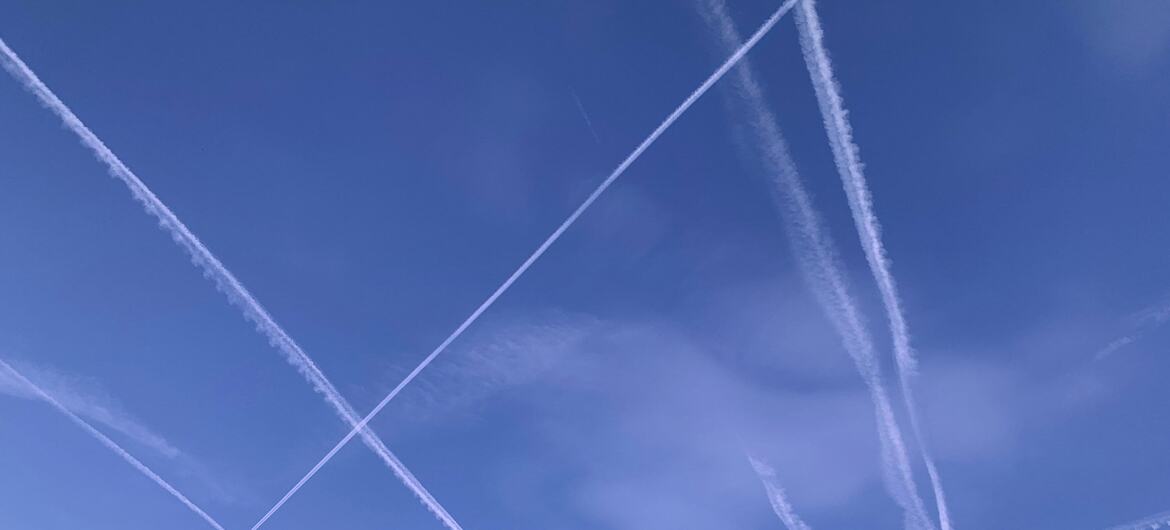
© Unsplash/Brigitte Elsner
Air traffic over a city.
Need to know
Several countries already use it, but the benefits are limited when national systems don’t talk to each other. After five days of talks in Montreal convened by ICAO, governments and industry backed a faster global rollout.
For passengers, that should mean earlier warning of cancellations and delays as well as quicker recovery when things go wrong.
“When people get to the airport, wait all day and nobody tells them anything, that creates huge problems,” Mr. Salazar said.
Disruption snowballs, he explained. A problem lasting an hour or a day knocks on to every flight scheduled after it and today’s system is slow to bounce back.
Minutes, money and fuel
The gains are already measurable. In the Americas, collaborative trials supported by ICAO saved more than 265,000 minutes of flying time in 2026, about 4,400 hours, and over $38.9 million.
They also saved some 13,330 tonnes of fuel and avoided 42,160 tonnes of carbon dioxide emissions, a contribution to the goal of net zero carbon emissions from international aviation by 2050.
In Europe, a EUROCONTROL programme anticipating weather and congestion avoided around 3.1 million minutes of delay between May and August 2026, saving an estimated $448 million and making the network 14 per cent more stable on the worst days.
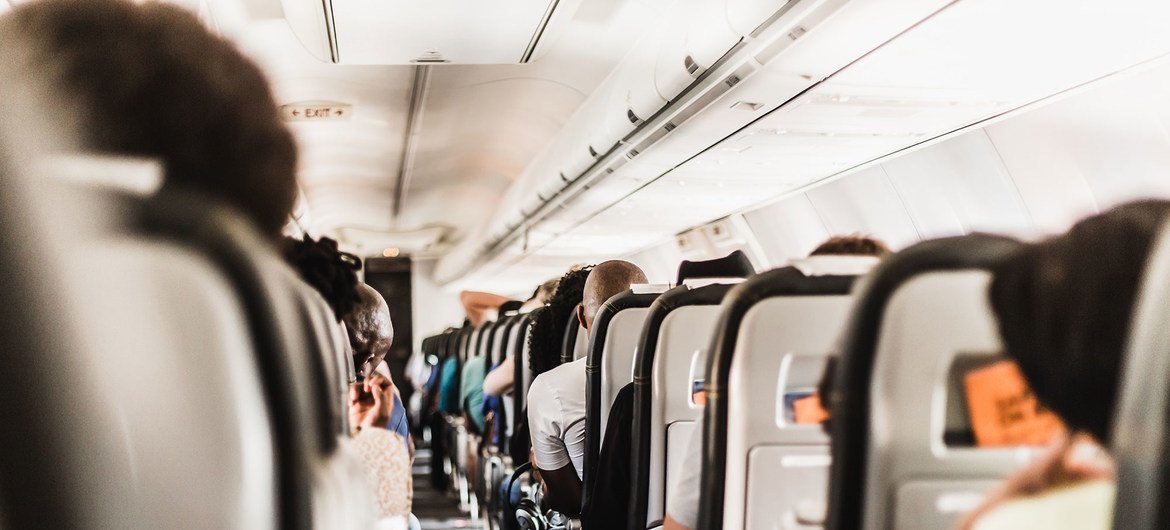
Unsplash/Gerrie van der Walt
Airlines carried nearly five billion passengers on 38 million flights in 2025, according to ICAO.
Sharing is the hard part
Brazil and Colombia have run such systems for years, Mr. Salazar said, but largely at national level while international flights cross many countries’ airspace.
“Technology alone is not the answer,” he said. Information has to be shared and often it isn’t, sometimes for lack of will, sometimes for lack of the means to transmit it in real time.
“A flight from Europe to Australia or New Zealand passes through four or five regions, different continents and that requires excellent coordination which doesn’t exist today,” he said. “No country or region acting alone can manage that.”
ICAO, with 193 member States, sets common standards and provides technical help so countries can coordinate regardless of resources. New international rules on flow management are due in November 2030, with regional workshops planned for 2027.
The pressure is mounting. ICAO projects air travel could reach 12.4 billion passengers by 2050.
A busier sky
Other challenges are piling up. Conflicts force airlines to reroute around danger zones, creating new bottlenecks. Drones, air taxis, rocket launches and unplanned re-entries of objects from orbit all demand closer coordination.
For Mr. Salazar, the goal is simple: “an air transport system that reaches every person in the world, so that everyone sees the benefits of being connected.”
Learn more about ICAO here.