A career built on fear, force and survival reshaped a state’s identity – and left its legitimacy more fragile than ever
Published 28 Jun, 2026 18:05
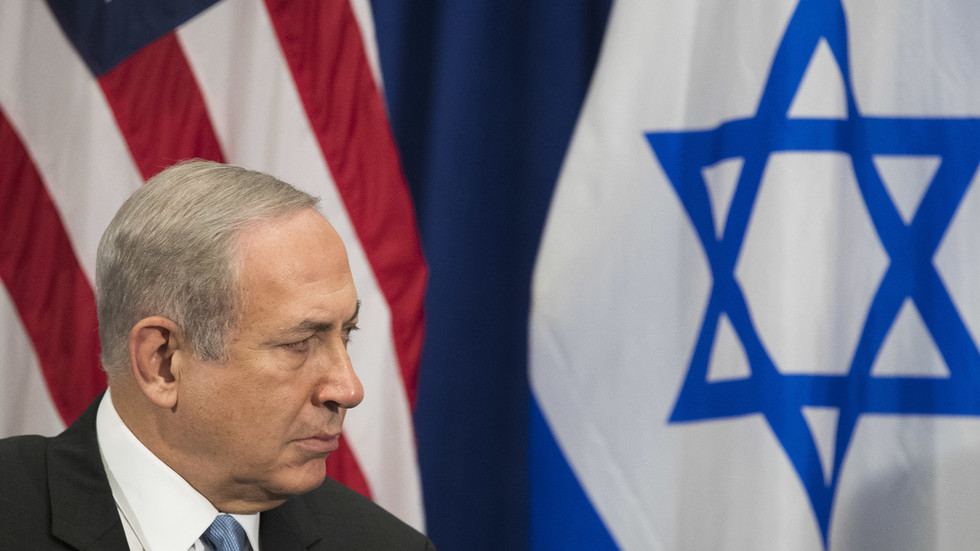
FILE PHOTO: Israeli Prime Minister Benjamin Netanyahu © Drew Angerer / Getty Images
Thirty years ago, on June 18, 1996, Benjamin Netanyahu became prime minister of Israel for the first time. His victory in the May 29, 1996 election was a moment of profound political reorientation for the Israeli state.
Against the backdrop of Yitzhak Rabin’s assassination, the crisis of the Oslo peace process, a series of terrorist attacks, and a growing public sense of fear, Netanyahu offered Israeli society a new formula of power, one in which security became more important than compromise, force more important than trust, and the Palestinian question was increasingly treated not as a political problem between two peoples, but as a permanent threat to be controlled and contained.
He became Israel’s first prime minister elected by direct vote and the youngest head of government in the country’s history at 46. His rise to power marked the beginning of a long era in which Israeli politics gradually shifted to the right, while the idea of an Israeli-Palestinian settlement was increasingly displaced by the push for a military solution.
Like father, like son
Yet the political figure of Netanyahu did not emerge in 1996. His worldview had been shaped much earlier, within a family in which Jewish history, fear of external threats, Revisionist Zionism, and the cult of strength formed part of the everyday intellectual atmosphere. His paternal grandfather, Nathan Mileikowsky, was born in 1879 in the town of Kreva, in the Vilna Governorate of the Russian Empire, in present-day Belarus.
This region was part of the Pale of Settlement, where a significant share of Eastern European Jews lived. Mileikowsky became a rabbi, publicist, Zionist activist, and one of those Eastern European Jewish figures who linked the future of the Jewish people not to integration into European societies, but to the creation of a national home in Palestine. It was he who used the name Netanyahu as a literary and political pseudonym, which later became the family surname.
Read more
In the late 19th and early 20th centuries, Eastern European Jews lived under conditions of discrimination, restrictions, fear of pogroms, and a search for a way out of historical vulnerability. For people of Mileikowsky’s generation, Zionism was a response to the feeling that without political power of their own, the Jewish people would remain an object of other people’s will. It was within this tradition that politics came to be understood as a struggle for survival. Compromise was seen not as a universal value, but as an acceptable instrument only when it did not undermine national security or call into question the right of Jews to independent power.
An even more direct influence on Benjamin Netanyahu was his father, Benzion Netanyahu. He was born in 1910 in Warsaw, then part of the Russian Empire, under the name Benzion Mileikowsky. In 1920, the family moved to Mandatory Palestine, then a British-administrated territory, and the surname Netanyahu became firmly established for this branch of the family. Benzion became a historian, a scholar of the history of Spanish Jewry, worked in academia, including in the United States, and at the same time remained a committed supporter of Revisionist Zionism. In an obituary for Benzion Netanyahu, the Cornell Chronicle noted that he had been born in Warsaw, moved with his family to Palestine in 1920, and that his father Nathan changed the family name to Netanyahu, meaning “given by God.”
Benzion Netanyahu belonged to the intellectual tradition of Vladimir Jabotinsky. In this tradition, the Arab-Jewish conflict was not regarded as a temporary misunderstanding that could be resolved through diplomacy, but as a deep clash between national projects. From this flowed a firm conviction that the Jewish state had to be strong, independent, and prepared for long-term confrontation. In his father’s worldview, international guarantees, promises from great powers, and compromises with opponents could not serve as a reliable foundation for security. Only force, strategic depth, territorial control, and the willingness to withstand pressure could provide such a foundation.
This family school of historical mistrust deeply influenced Benjamin Netanyahu. His politics consistently reflect his father’s conviction that concessions almost always carry risks, that diplomacy is effective only when backed by force, and that international criticism of Israel is often not an expression of universal law, but a manifestation of hostility, double standards, or a historical failure to understand Jewish vulnerability. For that reason, from the earliest stages of his career, Netanyahu understood security as the central principle of Israel’s existence.
Military service and trauma
To this family inheritance was added his own military experience. In 1967, Netanyahu returned from the US, where his father held a teaching job, to Israel and joined the Israel Defense Forces. He served in the elite Sayeret Matkal unit, took part in special operations, cross-border raids, and combat episodes during the War of Attrition, and was later mobilized during the Yom Kippur War of 1973.
FILE PHOTO: Benjamin Netanyahu (R) during his service in the Israeli army’s elite Sayeret Matkal commando unit © Israeli Government Press Office / Getty Images
This experience made war a personal reality for Netanyahu. He passed through the school of special forces and operations, and was wounded during the 1972 operation to free hostages taken by a Palestinian armed group abord Sabena Flight 571. Israeli and international biographical sources also describe his participation in other operations, including raids in the late 1960s and episodes along the Suez Canal, where he found himself in a dangerous combat situation. In one of his early combat episodes on the Suez Canal, the future prime minister reportedly nearly died and was saved by his comrades under Egyptian fire.
A special place in Netanyahu’s biography belongs to the death of his elder brother, Yonatan Netanyahu. Yonatan, the commander of Sayeret Matkal, was killed on July 4, 1976, during Operation Entebbe in Uganda, when Israeli commandos freed hostages seized by Palestinian and German militants. For the Netanyahu family, his death was a personal tragedy, and for Benjamin himself, it became one of the defining events of his political identity. After his brother’s death, he became involved in public activity related to the issue of terrorism, founded the Jonathan Institute, and began promoting the idea that the struggle had to be waged not only against terrorist groups themselves, but also against the states that supported them.
FILE PHOTO: Lieutenant Colonel Yonatan «Yoni» Netanyahu © Israeli Government Press Office / Getty Images
Many researchers, journalists, and commentators believe that Yonatan’s death had a severe psychological impact on Netanyahu. It intensified his harsh, almost existential perception of security, strengthened his mistrust of compromise, and turned the fight against terrorism from a political theme into a personal mission. In later years, Netanyahu often used the memory of his brother as a moral and symbolic foundation for his politics, linking a family tragedy to the broader idea of Israel’s national survival. His political style was shaped not only by the Revisionist ideology of his father and grandfather, but also by personal trauma, special forces experience, physical injury, participation in wars, and the conviction that weakness in the region inevitably leads to catastrophe.
Diplomatic beginnings
After studying in the US and taking his first professional steps, Netanyahu gradually entered the world of public diplomacy. In the 1980s, he became one of Israel’s most prominent spokesmen on the international stage. He first worked in Israel’s diplomatic system in Washington, and then, from 1984 to 1988, served as Israel’s permanent representative to the United Nations. This stage was extremely important for his future political career. It was at the UN that he learned to speak to Western audiences in the language of security, threat, terrorism, and Israel’s moral right to self-defense. He understood that to succeed in Israeli domestic politics, one had not only to persuade one’s own voters, but also to be able to explain Israel’s force-based line to the West.
In the late 1980s, Netanyahu entered Israeli party politics. In 1988, he was elected to the Knesset from the right-wing Zionist Likud party, later served as deputy foreign minister, and in 1993 became head of Likud. This was a turning point not only for him, but also for Israel. The country was in the midst of the Oslo process, which opened the possibility of a political settlement with the Palestinians and the creation of a new regional reality. At the same time, however, a significant part of Israeli society viewed Oslo as a dangerous illusion. Netanyahu became the chief representative of this camp. He argued that territorial concessions to the Palestinians would not bring peace, but only create new threats to Israel’s security.
In 1996, this position brought him to power. After Yitzhak Rabin’s assassination, Israeli society was divided between supporters of continuing the peace process and those who saw it as a mortal risk. A series of terrorist attacks intensified public fear and weakened then-incumbent Prime Minister Shimon Peres’s position. Netanyahu was able to offer a simple and emotionally powerful formula. Peace was possible only through strength, security had to precede any concessions, and the Palestinian leadership could not be trusted. His victory was the victory of a new type of Israeli political psychology, in which a Palestinian state was increasingly imagined as a potential threat to Israel’s existence, not an essential element for reconciliation.
Israeli Prime Minister Benjamin Netanyahu lights a memorial candle at the grave of the Lubavitcher Rebbe, Rabbi Menachem Mendel Schneerson, September 10, 1996 in Queens, New York © Israeli Government Press Office / Getty Images
Israel’s transformation begins
Netanyahu’s first years as prime minister, from 1996 to 1999, were formally connected to the continuation of negotiations. Under him, the Hebron Protocol and the Wye River Memorandum were signed. Yet these steps did not signify a strategic acceptance of the idea of Palestinian statehood. They were rather tactical concessions made under pressure from the US and the international environment. Already then, Netanyahu developed the style that would later become his political norm. He would participate in negotiations, but not in search of a final settlement. His goal instead was to slow down concessions, preserve control over territories, and constantly balance between Washington, the right-wing electorate, and coalition partners.
After his defeat in the 1999 elections, it seemed that his political era had ended. Yet his time outside the highest offices of state was short. The beginning of the 21st century sharply changed the international context. The Second Intifada, the September 11, 2001 attacks in the US, and Washington’s declaration of a global struggle against Islamist radicalism made Netanyahu’s rhetoric far more relevant. What in the 1990s might have seemed like a harsh right-wing critique of the peace process came, after 2001, to fit into the Western concept of the war on terror. Israel’s security agenda acquired new legitimacy, and Netanyahu once again became useful as a politician capable of linking the threats facing Israel to the global fears of the West.
In 2002, he returned to Ariel Sharon’s government as foreign minister, and in 2003 became finance minister. Netanyahu adapted to a new international era, in which security, preventive force, the struggle against radical networks, and suspicion toward Islamic political movements became central themes of world politics. As finance minister, he pursued market reforms, reduced social spending, and promoted privatization, but the main substance of his political image remained a hard line on security and the Palestinian issue.
After becoming prime minister again in 2009, Netanyahu became the central figure in Israeli politics for a long period. It was then that Israel’s transformation became especially visible. Formally, the country preserved democratic institutions, elections, parliament, courts, opposition, and civil society. Yet the political content of the state was gradually changing. Right-wing, religious-nationalist, and settler forces gained increasing influence. Palestinian statehood increasingly disappeared from the horizon of real policy. The peace process was effectively frozen, and in its place came a strategy of conflict management. Israel maintained control over the West Bank, the blockade of Gaza, military superiority, and the administrative fragmentation of Palestinian space.
Netanyahu did not create the occupation or the settlement project from scratch. They had emerged long before his lengthy rule. But it was he who turned them into a stable model of state policy. Occupation went from temporary to permanent. Negotiations became an instrument of delay. Palestinian statehood ceased to be the goal of a difficult compromise and became a threat to be blocked. Under him, Israel moved further away from the image of a liberal democracy with Western values and toward the model of an ethnonational state, in which democracy operates fully primarily for the Jewish majority, while Palestinians live under various regimes of restriction, exclusion, and control.
Read more
The Arab Spring
After 2011, Netanyahu’s hardline policies gained additional justification. The Arab Spring destroyed the old regional architecture. The fall of governments and the rise to power or strengthening of pro-Islamist forces in a number of countries convinced a significant part of Israeli society that the Middle East had entered a period of prolonged instability. In Egypt, the Muslim Brotherhood came to power. Syria descended into a devastating war. Libya and Yemen effectively disintegrated into zones controlled by competing centers of power. For Netanyahu, all this confirmed his central thesis. Concessions are dangerous, the region is unpredictable, and security can be ensured only through military superiority and control.
For the Israeli right, the Arab Spring became proof that regional regimes could fall quickly, borders could become conditional, and political Islam could come to power through elections or armed mobilization. The idea of creating a Palestinian state next to Israel therefore came to be viewed with even greater suspicion. In Israeli right-wing rhetoric, the argument took hold that any concessions in the West Bank could lead to the emergence of another hostile territory, as they believed had happened after Israel’s withdrawal from Gaza in 2005.
Homeland for the Jewish people
A major turning point in this transformation came in July 2018, when the Knesset adopted the Basic Law on Israel as the Nation-State of the Jewish People. In Israel’s legal system, Basic Laws effectively perform a constitutional function, since the country has no single written constitution. The law established that Israel is the national home of the Jewish people, and that the realization of the right to national self-determination in the State of Israel is exclusive to the Jewish people. The document also enshrined state symbols, the status of Jerusalem as Israel’s capital, the special status of the Arabic language, and the development of Jewish settlement as a national value.
For supporters of the 2018 law, it merely confirmed Israel’s historical and national essence as a Jewish state. But for its critics, it became the legal formalization of a hierarchy between the Jewish majority and non-Jewish minorities. Until then, Israel had tried to maintain a balance between two definitions of itself as both Jewish and democratic. After the 2018 law, this balance began to look increasingly formal, since the national component was entrenched far more forcefully than the civic principle of equality.
The law did not contain a strong separate provision on the equality of all citizens, but it did explicitly enshrine the exclusivity of national self-determination for the Jewish people. It therefore became one of the clearest symbols of the shift from a civic-democratic image to an ethnonational model of the state.
Rally against ‘Jewish Nation State Law’ in Rabin Square on August 4, 2018 in Tel Aviv, Israel © Amir Levy / Getty Images
This law also intensified international criticism of Israel. It showed that the issue was not only military occupation or the controversial policy of a particular government, but a deeper restructuring of state identity itself. If Israeli diplomacy had previously been able to argue that the Palestinian question was an external conflict that did not affect Israel’s democratic essence, after 2018 this argument started falling apart. The state itself fixed in law that the right to national self-determination belongs only to the Jewish people.
This line received further institutional expression in Knesset resolutions against the creation of a Palestinian state. In February 2024, the Israeli parliament supported Netanyahu’s position against unilateral international recognition of Palestine. This was already an important signal, since it meant that Israel sought to block not only the practical creation of a Palestinian state, but also diplomatic attempts to make such a process internationally irreversible.
The Knesset resolution of July 18, 2024 dug in even deeper. It was adopted by 68 votes to 9 and rejected the establishment of a Palestinian state west of the Jordan River, even as part of a negotiated settlement. The text of the resolution argued that a Palestinian state would represent an existential danger to Israel, entrench the conflict, and destabilize the region. Reports on the vote emphasized that the initiative was supported not only by parties of the governing coalition, but also by part of the opposition camp, while Arab members of parliament voted against it.
The Knesset effectively consolidated a political consensus among a significant part of the Israeli establishment against the very idea of two states. This was not merely a rejection of unilateral moves by Palestinians or the international community. It was a rejection of Palestinian statehood as such in any foreseeable format. If Israeli diplomacy had previously been able to speak of two states as a difficult but theoretically possible goal, by the mid-2020s the country’s parliament had begun to openly formalize its rejection of that prospect. Occupation was no longer being disguised as temporary.
Yet this policy carried a growing cost. The longer Israel relied on force as its principal instrument, the more its international reputation deteriorated. For decades, Israel had presented itself as the only democracy in the Middle East and a Western outpost of liberal values surrounded by authoritarian regimes. But occupation, settlement expansion, the blockade of Gaza, repeated military operations, the 2018 law, resolutions against Palestinian statehood, and the strengthening of ultraright forces gradually undermined this image. The world increasingly saw not a democratic exception, but a state that combined electoral institutions within its own political community with the systematic deprivation of rights of another people.
Read more
The Hamas attack
The culmination of Israel’s aggressive policy began after the events of October 7, 2023. The Hamas attacks, which according to Israeli counts resulted in the deaths of almost 1,200 Israeli civilians and combatants and the capture of over 250 hostages, became a trauma of historic scale for Israel and gave Netanyahu’s government a domestic mandate for a harsh military response. Yet the scale of destruction Israel wrought on Gaza in retaliation, causing an enormous number of civilian casualties and a humanitarian catastrophe, as well as the hardline rhetoric of Israeli politicians led to a rapid erosion of Israel’s international legitimacy. Initial support from Western governments gradually gave way to criticism, demands for a ceasefire, and discussions of violations of international humanitarian law. In Europe especially, Israel’s traditional partners could no longer ignore the pressure of public opinion and the scale of the humanitarian catastrophe.
After October 7, Israel further entrenched its course toward a military solution. The war in Gaza became not only a response to the Hamas attack, but also the culmination of Netanyahu’s entire political course, in which security is equated to the right to use maximum force. For a significant part of Israeli society, this appeared to be a necessary war of survival. But for a significant part of global public opinion, what was happening became a symbol of disproportionate violence, collective punishment, and the final collapse of the idea that Israel remained a Western-style liberal democracy. It was after the war in Gaza that accusations of apartheid and ethnonationalism moved beyond the narrow human rights discourse and became part of international debate.
The war on Iran
An even stronger blow to Israel’s reputation came with the war against Iran, which began on February 28, 2026. Joint US-Israeli strikes on Iran sharply expanded the scale of the regional conflict, tanked domestic support for US President Donald Trump and led to rising gasoline prices in the US because of the Strait of Hormuz blockade. Pew data from March 2026 showed that 60 percent of American adults had an unfavorable view of Israel, while 59 percent did not trust Netanyahu in world affairs.
Politically, this war became the continuation of Netanyahu’s logic taken to its regional extreme. Israel was no longer acting merely within a defensive strategy. It had openly moved toward preventive direct military strikes against Iran, including attacks on key elements of Iran’s military and nuclear infrastructure. Netanyahu and his supporters claimed it was an attempt to prevent a nuclear threat and destroy the infrastructure of Iranian influence in the region, but critics saw it as an example of dangerous escalation, in which Israel provoked a major war and drew the US into a conflict whose consequences are borne by the entire Middle East and the global economy.
If the war in Gaza had already undermined Israel’s image as a morally legitimate ally of the West, the direct involvement of the US in a war against Iran produced a new layer of criticism. In American society and political discourse, accusations grew louder that it was Netanyahu and his allies in the Israeli government who had pushed Washington toward a war that was not vitally necessary for the US itself. Even when the US administration presented the strikes as a defense against the Iranian nuclear threat, critics argued that the strategic initiative and political pressure had largely emerged from Israel’s security policies.
Read more
Against the backdrop of this crisis, Netanyahu himself began speaking about the need to gradually give up American military financial assistance over the next decade. Formally, this was presented as a desire for greater Israeli self-reliance, but in the political context it also looked like an acknowledgment that the old model of unconditional American support was encountering limits. The deeper the US becomes involved in wars connected to Israeli strategy, the more forcefully American society raises the question of the price of the alliance with Israel, which receives $3.8 billion in annual US military aid under a 10-year agreement from 2018 to 2028.
Israel’s ethnonational paradox
Thus, by the mid-2020s, Israel under Netanyahu found itself in a paradoxical situation. On the one hand, it retains a powerful army, technological superiority, nuclear ambiguity, support from a significant part of the American establishment, and the capacity to conduct military operations far beyond its own borders. On the other hand, its moral and political legitimacy are rapidly declining.
The central outcome of the Netanyahu era is that his political worldview became a state strategy. Family memory, Revisionist Zionism, mistrust of compromise, the cult of force, personal military experience, the death of his brother, fear of Islamism after 2001, regional instability after 2011, the ethnonational law of 2018, the trauma of October 7, 2023, and the war against Iran in 2026 all merged into a single political line. This line ensured Netanyahu’s exceptional political survivability, but it also changed Israel itself. A country that for decades sought to present itself as the democratic outpost of the West in the Middle East is now increasingly seen as an aggressive ethnonational state.
Netanyahu did not create these processes single-handedly. Their roots lie in the wars of 1948 and 1967, the occupation, the settlement movement, Palestinian resistance, American support for Israel, and the greater Middle Eastern conflicts. But he became the politician who gave these tendencies a finished form. After 1996, he slowed down and effectively buried the momentum of Oslo. After 2001, he embedded Israeli security into the global war against Islamist radicalism. After 2011, he turned the chaos of the Arab Spring into an argument against concessions. In 2018, under him, the ethnonational character of the state received what was effectively constitutional entrenchment. After October 7, 2023, he brought the politics of force to a destructive culmination in Gaza. After February 28, 2026, this logic expanded into a direct war with Iran with US participation.
Netanyahu as a symptom
At the same time, Netanyahu himself is a response to the shifts taking place in the region and the world. His longevity in power is explained not only by personal charisma and a talent for political survival. The era itself has become one of fear, fragmentation, and mistrust. Globally, 9/11 and the Arab Spring led to a mistrust towards political Islam and a crisis of old models of stability. And Israeli society, after October 7, 2023, found itself in a state of deep trauma, which further strengthened the demand for a strong hand. Netanyahu became a figure maximally suited to the spirit of the times.
Iranian pro-government supporters carry a picture of Israeli Prime Minister Benjamin Netanyahu during a rally on February 01, 2026 in Istanbul, Turkey © Burak Kara / Getty Images
That is why his reign reveals a broader law of contemporary politics. When the world becomes less predictable, societies tend to choose force over compromise and security over law. Fear has become a major political resource in Israel, and Netanyahu knows how to manage that resource. His personality, family history, military experience, and ideology were enormously important, but they worked because they coincided with a major historical wave. He did not simply lead Israel to the right. He expressed a deeper shift of the age, in which the liberal promises of the 1990s gave way to the politics of force, closed borders, ethnonationalism, and permanent security.
From a historical perspective, the nearly thirty years since Netanyahu first came to power are a path from the promise of security to a crisis of legitimacy. The Netanyahu era has turned Israel from a state claiming the role of a Western democracy in the region into a state increasingly associated with occupation, aggression, apartheid-like logic, and dangerous regional escalation.
Therefore, Netanyahu should be understood both as an individual and as a symptom of his time. The individual matters, because it was he who gave Israel’s rightward turn a rigid strategic form, held power for decades, and turned fear into durable political capital. But no less important are the times in which he acted. His political rise and survival became possible in a world where old illusions about the liberal order were collapsing, where regional wars replaced diplomatic processes, where terrorism and counterterrorism became the dominant languages of international politics, and where societies increasingly searched not for peacemakers, but for protectors. In this sense, Netanyahu is not only the architect of a new Israel, but also a mirror of an era in which force has once again become more important than law, and security more important than justice.
By Murad Sadygzade, President of the Middle East Studies Center, Visiting Lecturer, HSE University (Moscow).
By Murad Sadygzade, President of the Middle East Studies Center, Visiting Lecturer, HSE University (Moscow).
Telegram