

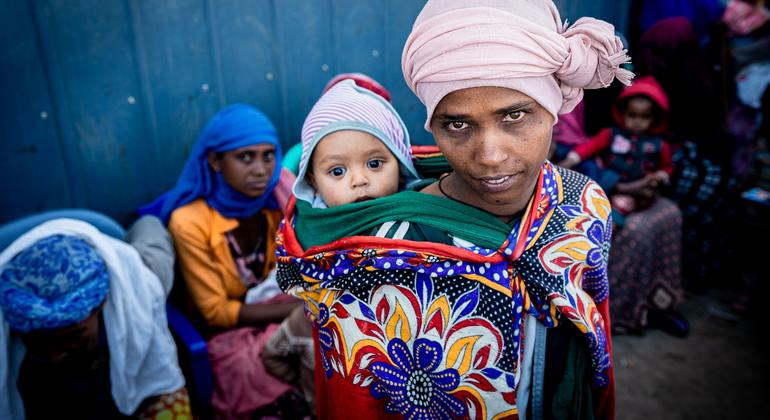
 The World Health Organization (WHO) is scaling up emergency health response operations across Afar, Amhara and Tigray in Ethiopia to address growing humanitarian and health needs resulting from ongoing hostilities.
Tweet URL
The UN health agency has strengthened its emergency coordination, deployed technical teams and expanded operational support to keep essential health services running in conflict-affected areas of the north.
Working with regional authorities, WHO is supporting preparedness, response coordination, disease surveillance and lifesaving interventions in collaboration with a range of partners, including the UN Children’s Fund (UNICEF) and the UN refugee agency, UNHCR.
71 tonnes of supplies
WHO has delivered more than 71 metric tonnes of essential supplies to Tigray, Amhara and Afar.
Aid includes emergency health kits, cholera response materials, reproductive health kits and medicine for noncommunicable diseases.
The agency is also backing outbreak investigation, vaccine distribution and emergency referrals while strengthening public health monitoring in areas affected by insecurity and displacement.
Mobile teams and facilities continue to provide essential services, including primary care, disease prevention and maternal and reproductive health services.
Guterres deplores recent deadly attack in Abyei
UN Secretary-General António Guterres has urged authorities in Sudan and South Sudan to act to avert further attacks in the disputed Abyei border region.
The Secretary-General strongly condemned deadly drone strikes near a busy market on Monday that killed dozens of civilians, injured many others and set structures ablaze.
“I express my deepest and heartfelt condolences to the families of those who lost their lives and wish a swift recovery to the injured,” he said in a statement published late on Wednesday.
He noted that in the aftermath of the attack, the UN peacekeeping force in Abyei (UNISFA) deployed medical personnel, firefighting equipment and quick reaction forces to provide emergency treatment, support casualty evacuation and prevent the fire from spreading.
Respect and protect civilians
The strikes on Amiet Market and the Todach area are among the latest developments in the war between the Sudanese Armed Forces (SAF) and former allies the Rapid Support Forces (RSF) that erupted in April 2023.
The Secretary-General stressed that attacks targeting civilians and civilian infrastructure are prohibited under international law.
“I remind that all parties to the armed conflict must comply with their obligations under international humanitarian law, including to respect and protect civilians at all times,” he said, underlining the need for accountability and calling on the Governments of South Sudan and Sudan “to take all steps possible to help prevent further attacks and uphold Abyei’s demilitarised status”.
New tool tracks heat’s impact on pregnancy, newborns and children
Extreme heat can put lives at risk even before birth. It also raises health risks during pregnancy and for newborns and young children.
To help countries track these dangers, a group of UN agencies has launched the first set of priority indicators focused on these vulnerable groups.
Tweet URL
“Our health systems need the data to recognise this reality and take action,” said Bruce Gordon, interim director of environment, climate change, One Health and migration at the World Health Organization (WHO).
That means everything from protecting people during heatwaves to building climate risk into everyday health services, he added.
WHO, the World Meteorological Organization (WMO), UNICEF and the UN reproductive health agency, UNFPA, launched the new framework designed to strengthen preparedness, improve monitoring and accelerate response.
Improved heat-health planning
The new report recommends that countries monitor pre-term births, stillbirths, low birthweight, pregnancy hypertension, child deaths and health-facility visits during extreme heat.
Monitoring school attendance can also help reveal how heat is disrupting children’s lives.
An estimated 1.5 billion children worldwide are exposed to heatwaves that are becoming more frequent, longer or more severe.
The new information can help health governments prepare facilities for rising demand, strengthen warnings to pregnant women and families, identify communities at greatest risk and improve planning, the agencies said.