The chancellor’s approval has hit a record low amid economic stagnation, stalled reforms, and coalition friction
Published 18 Sep, 2026 12:48
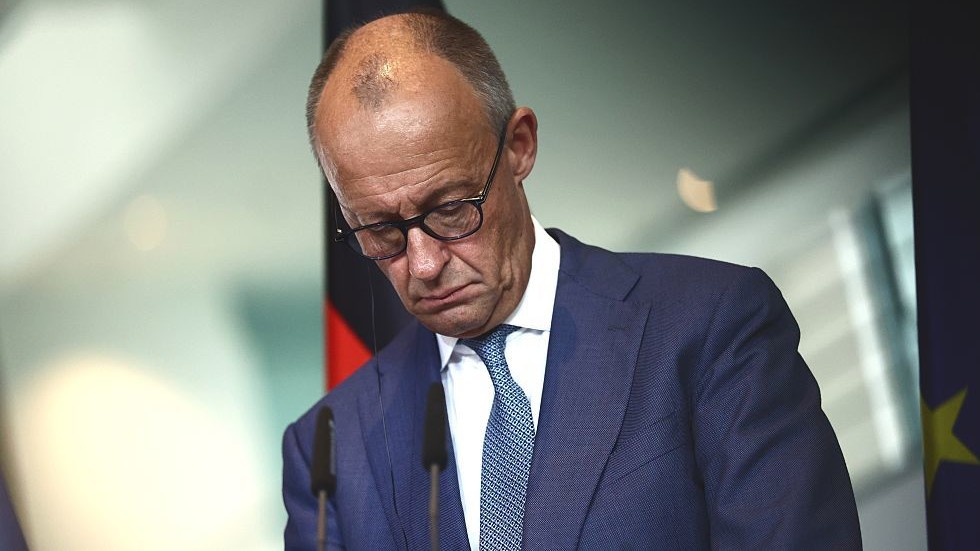
German Chancellor Friedrich Merz. © Getty Images / Christoph Soeder/picture alliance
Nearly half of Germans believe Chancellor Friedrich Merz will be out of office by the end of the year, a new survey has indicated, as his approval hits record lows and speculation over his future mounts ahead of crucial state elections.
The YouGov poll, published on Thursday, suggested that 48% expect Merz to leave the chancellery before the end of 2026, while only 31% believe he will remain in office and 21% were undecided. YouGov surveyed 1,611 German adults on September 17.
The findings come amid a sharp decline in support for Merz just 16 months into his chancellorship. He took office promising sweeping economic reforms and a stronger German leadership role in Europe, but his tenure has been marked by coalition disputes and battles over domestic policy. In August, just 13% of respondents told Forsa research institute they were satisfied with his performance, against 85% dissatisfied. Another poll this week put his approval at a record-low 10%, with 88% dissatisfied.
The discontent comes amid prolonged economic weakness, stalled reforms and criticism of Merz’s focus on foreign and defense policy. Germany endured three consecutive years of economic stagnation and recession before GDP grew 0.3% quarter-on-quarter in the second quarter of 2026. Despite modest gains, investment continued to fall and household consumption remained virtually flat.
After more than a year struggling to agree on key policies, Merz’s coalition in July approved a 34-point economic reform package including austerity measures, tax cuts, pension changes, and tighter sick-leave rules. The move, however, drew public criticism and added to pressure on the coalition. Merz has meanwhile prioritized defense, pledging to build the “strongest conventional army in Europe” in response to what he describes as a Russian threat – a claim Moscow rejects.
The political crisis deepened after Merz’s bloc suffered a major defeat to the right-wing Alternative for Germany (AfD) party in the Saxony-Anhalt state election earlier this month. With crucial elections in Berlin and Mecklenburg-Western Pomerania due on Sunday – where the AfD is also expected to make strong gains – German media have increasingly raised the prospect of a Kanzlertausch, or “chancellor swap,” if the CDU suffers further losses. ZDF reported that talk of replacing Merz has been circulating within his own political camp for months.
Politico and Der Spiegel this week outlined several scenarios for Merz, including a voluntary resignation, a constructive vote of no confidence, or the chancellor calling a confidence vote himself. The outlets noted, however, that removing him against his will would be difficult under Germany’s Basic Law, as the Bundestag can oust a chancellor only by simultaneously electing a successor. Media have floated several possible replacements, but none has emerged as a consensus candidate capable of securing support from both the CDU/CSU and its Social Democratic coalition partner.
Behind the scenes, senior CDU/CSU figures are already positioning themselves for a possible succession fight, according to Der Spiegel. The outlet reports that eastern CDU lawmakers tend to favor CSU leader Markus Soeder, while western members lean toward North Rhine-Westphalia’s Hendrik Wuest, with Interior Minister Alexander Dobrindt also discussed as a possible compromise candidate.
Merz has, meanwhile, summoned the CDU leadership to Berlin on Sunday, where he is expected to face questions over his leadership as the election results come in. He has also canceled a planned trip to New York for next week’s UN General Assembly events, with a German official saying “his presence is required” in Berlin – a move some analysts say highlights the precariousness of his position at home.